
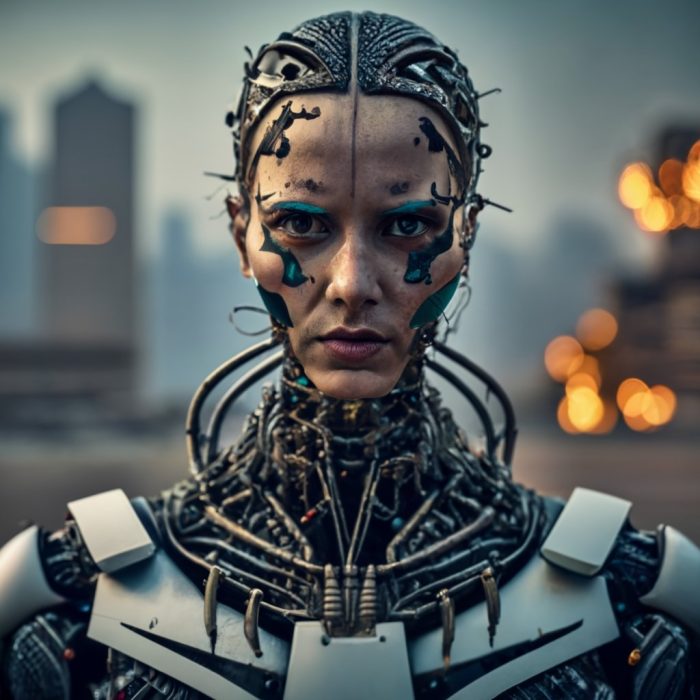
AI has fascinated us with its immense capabilities and enormous potential, reshaping industries and improving our lives through various applications across different sectors. It has achieved breakthroughs in areas that were once thought impossible, offering great possibilities. But is AI our worst enemy?
The capabilities that AI has surprised us with include:
- Machine Learning and Predictive Analytics: Computers analyze vast amounts of data to identify patterns and make accurate predictions.
- Natural Language Processing (NLP) and Speech Recognition: Speech recognition technology is a subset of NLP and is revolutionizing interactions with our devices and audiences.
- Computer Vision and Image Recognition: A powerful tool for analyzing and categorizing images with algorithms that can identify objects, faces, and even emotions.
- Robotics and Automation: AI-powered robots are prevalent in industries such as manufacturing, healthcare, and logistics.
- Personalization and Recommendation Systems: These systems excel in understanding user preferences and behavior, from e-commerce and OTT platforms to social media, providing personalized recommendations and targeted marketing campaigns.
AI capabilities have proven to be a superior source of knowledge, and this dimension will continue to expand at an astonishing pace, empowering business and innovation. However, AI is not without its pros and cons.
Can AI become our worst enemy that we are not ready for?
Supportive arguments for AI being our worst enemy are:
- AI, with the potential to surpass human intelligence and capabilities, poses a threat. Its ability to process information at an incredibly fast pace might result in AI outsmarting humans in unexpected ways.
- AI-powered military systems are extremely dangerous if they fall into the wrong hands. The development of autonomous drones and other weapon systems could become catastrophic if used irresponsibly or maliciously.
- There is a significant loss of jobs across various sectors due to increased automation and AI-centric industries, causing social and economic disruptions.
- AI systems rely on vast amounts of data, raising privacy concerns and the potential for the misuse of personal information.
- AI systems with decision-making capabilities encounter challenges as they lack the ability to fully understand complex moral and ethical implications.
Defending arguments for AI, even though it may be considered our worst enemy, are:
- The notion of AI being our worst enemy is an exaggeration.
- Human control and oversight can play a crucial role, especially with advancements in AI supported by strict regulations and ethical guidelines.
- AI is also a supportive tool, collaborating with AI systems for breakthroughs in science, healthcare, and other fields.
- Human intelligence can be augmented with AI’s potential to provide more informed decisions.
- Repetitive tasks can be automated with AI systems, freeing up humans to focus more on creative and complex endeavors.
Source:- Codecool, federalistathami
 ledlights