
Really? Have you ever tried to use Siri if you don’t have a British accent?
Jokes apart.
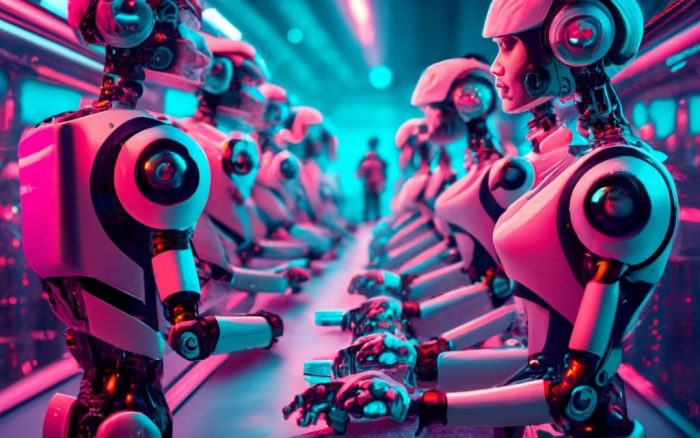
As AI is in demand, so is its popularity becoming a threat to poor people, who are increasingly seen as its biggest enemy. Even though AI technology is transforming industries and creating new opportunities, it has raised major concerns regarding inequalities, especially for those in poverty.
• According to the McKinsey report, AI and automation may displace human workers in certain jobs and industries. Up to 30% of work activities could be automated by 2030, potentially leading to higher unemployment if displaced workers cannot transition to new jobs (McKinsey report).
• Research shows that unemployment can have negative societal impacts, including poorer physical and mental health, rising crime and violence rates, political instability, and other social ills (NCBI).
It is controversial to claim that AI is an enemy of poor people, creating a phobia without valid proof or facts to support the notion. Different perspectives and arguments state that AI technology may affect poverty and inequality differently. However, some statements suggest that AI technology may not be the biggest enemy for poor people.
• AI has also created a winner-takes-all economy that benefits only a few elites who own and control the technology, widening the gap between the rich and the poor.
• AI can also empower poor people to participate in the digital economy and create new opportunities for innovation and entrepreneurship.
Nonetheless, AI technology is considered by some as the biggest enemy of poor people, as it has the potential to replace jobs with machines and algorithms, leaving individuals with no income or skills to compete in the global market.
However, AI technology is not necessarily considered the biggest enemy for poor people but a potential ally to help them overcome hunger, illiteracy, and disease. It is observed that with proper access, AI can provide information, education, and healthcare in remote and underserved areas to improve agricultural productivity and environmental sustainability.
AI technology is also portrayed as a neutral tool to be used for good or evil, depending on how it is designed, deployed, and regulated. AI can have positive or negative impacts on poverty and inequality depending on the choices made by researchers, businesses, governments, and civil society.
One of the main arguments is that the implementation of AI systems leads to job displacement, particularly for low-skilled workers. AI-powered automation and robotics have already begun to replace human labor in the manufacturing, logistics, and customer service industries.
The trend is expected to continue, with 800 million jobs that could be automated by 2030. While some claim that automation will create new opportunities and boost production, others are concerned that job displacement would disproportionately affect low-income individuals who lack the skills and education required to shift to other industries, potentially leading to additional unemployment and economic hardship for people who are already struggling to make ends meet.
The use of AI can also be seen as having negative effects on the poverty of individuals. Algorithms used in credit scoring, hiring, and criminal justice systems are biased against marginalized communities, perpetuating existing inequalities. Even facial recognition technology has been criticized for its potential to disproportionately target and harm marginalized communities, with studies showing less accuracy when identifying people with darker skin tones, leading to higher rates of false positives and wrongful arrests.
But AI is not always an issue for poor people. AI can help address the root causes of poverty, such as the lack of access to education and training opportunities. Free or low-cost access to high-quality education and training is provided by AI-powered educational platforms.
To reap the benefits of AI for individuals, regardless of their socioeconomic status, it is essential to address the ethical and legal concerns surrounding the use of artificial intelligence. Policymakers and experts must develop strategies to ensure that individuals in poverty are not left behind in the transition to an AI-powered economy. It is important to recognize the benefits of AI and ensure its potential is harnessed for poverty alleviation.
Sources:- MIT technology review, nbcnews, imf
 ledlights