
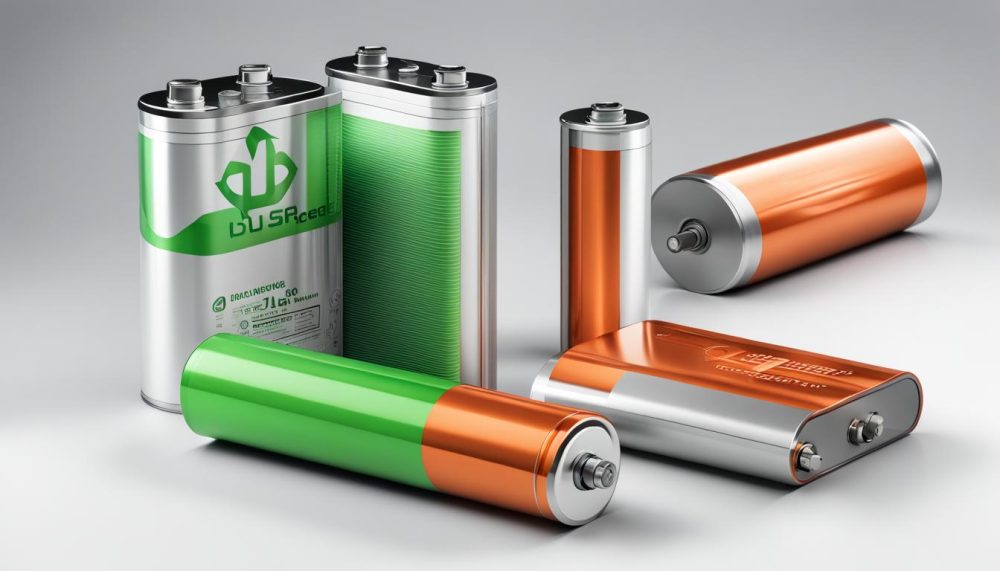
First, let us understand what Sustainable Battery Technology is. It refers to the development and use of batteries that are more efficient, durable, safe, and environmentally friendly than conventional batteries.
As the name suggests, it helps reduce greenhouse gas emissions, improve air quality, and conserve natural resources by enabling the electrification of mobility and the integration of renewable energy sources.
Finally, in economic prospects, it creates new opportunities to enhance the competitiveness and resilience of businesses. The different types of sustainable battery technology are lithium-ion batteries, solid-state batteries, flow batteries, and metal-air batteries.
Lithium-ion batteries are mainly used in portable electronics and electric vehicles due to their high energy density, long cycle life, and fast charging capability. However, it is not without its major challenges, such as the depletion of critical minerals, the generation of hazardous waste, and the risk of supply chain disruptions. Hence, recycling and reuse of lithium-ion batteries are crucial for creating a circular and resilient battery value chain.
Solid-state batteries are a promising alternative to lithium-ion batteries, using solid electrolytes instead of liquid or gel electrolytes. This makes them safer, lighter, and more stable, allowing for storing more energy and charging faster. However, they also face technical and economic barriers, such as the difficulty of scaling up production, the high cost of materials, and compatibility with existing infrastructure. QuantumScape is one of the leading companies in solid-state battery technology.
Flow batteries are also a sustainable battery technology that uses liquid electrolytes stored in external tanks and pumped through a cell stack. This makes them suitable for large-scale and long-duration energy storage, as they can store a lot of energy and discharge it over a long time. The drawbacks are low energy density, high maintenance cost, and low efficiency. The Vanadium redox flow battery is one example, using vanadium ions in different oxidation states as the electrolyte.
Metal-air batteries are also a type of sustainable battery technology that uses metal electrodes and oxygen from the air as the electrolyte. This makes them very cheap, lightweight, and environmentally friendly, as they use abundant and non-toxic materials. They have limitations, such as low power density, short shelf life, and poor reversibility. The Zinc-air battery is one example.
For long-term benefits, the following factors need to be considered: the size, location, and nature of your business, the availability and cost of the battery technology, compatibility and integration with your existing system, and the regulations and incentives in your market.
The beneficial reasons for using sustainable battery technology are:
- Reducing carbon footprint and improving environmental reputation by using batteries that are more efficient, durable, and recyclable than conventional batteries.
- Saving money by increasing profitability through using batteries to lower energy bills, reduce maintenance costs, and provide backup power in case of grid outages.
- Creating value and enhancing your competitiveness by using batteries to enable new products and services.
- Contributing to social and global goals by using batteries to support renewable energy sources and improving energy access and security.
Challenges in using sustainable battery technology include:
- Technical and economic barriers due to the lack of availability, affordability, and reliability of battery technology with high upfront investment and operational costs.
- Regulatory and market uncertainties, such as the lack of clear and consistent policies and standards, and variability of incentives and subsidies.
- Facing environmental and social risks, such as the potential for environmental degradation, human rights violations, and safety hazards associated with the extraction, production, and disposal of battery materials.
Sustainable battery technology is not just a necessity but also an opportunity. Power up your business with sustainable battery technology to create value for yourself and for society while contributing to the global goals of climate action and sustainable development.
Sources:- the buzzevnews, nature sustainability, IEA, weforum, ecologist
 ledlights