
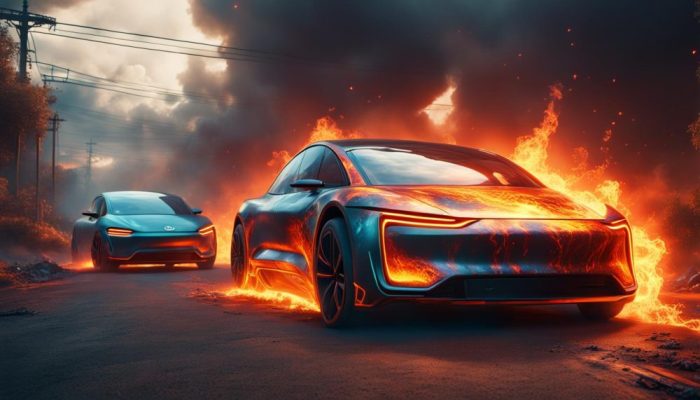
Electric vehicles (EVs) have been gaining popularity as a sustainable and eco-friendly mode of transportation. However, the recent cases of EVs catching fire have raised concerns about their safety.
Though the incidents are relatively rare, they have sparked debates about the risks associated with EVs and the adequate measures that need to be taken to avoid such accidents. In this article, we’ll explore the reasons behind the fire incidents in EVs and discuss the measures that can be taken to ensure the safety of these vehicles.
The main reasons for electric vehicle fires are:
- Electric vehicles use lithium-ion batteries containing organic liquid electrolytes that are flammable and volatile. If the battery cells are damaged, overheated, or short-circuited, the electrolytes can leak and ignite, causing a chemical reaction to generate more heat and fire.
- Electric vehicles with high-voltage wiring and components can spark or malfunction, especially if exposed to water, salt, or corrosion. This can create an electrical hazard that can ignite the battery or other flammable materials in the vehicle.
- Electric vehicles have complex and sophisticated systems that require careful design, manufacturing, and testing. If there are any defects, errors, or inconsistencies in the battery or the vehicle, they can compromise the safety and performance of the electric vehicle and increase the risk of fire.
The real-life examples of electric vehicle fire incidents:
- A fire broke out on the vehicle deck of the MS Pearl of Scandinavia on its way from Oslo to Copenhagen.
- A Zotye M300 EV operating as a taxicab caught fire in Hangzhou, China, in April 2011.
- Chevrolet Bolt, Volt, Fisker Karma, BYD e6, BYD Han EV, BYD Tang also registered major fire incidents.
- Tata Nexon EV also burst into flames, marking the first EV fire for Tata Motors.
- Okinawa Scooter, at least six incidents of two-wheeler electric vehicles catching fire have been reported with the latest being one accident in Tirupur, Tamil Nadu.
Now, we have to consider how not to become a victim in the electric vehicle catching fire scenario:
- Choose a reliable and reputable electric vehicle manufacturer and battery supplier for a long-range of use.
- Avoid overcharging, undercharging, or fast-charging the battery and use a compatible and certified charger and outlet.
- Keep the battery and the vehicle in a cool and dry place to avoid exposure to extreme temperature, humidity, or sunlight.
- Regularly inspect the battery and the vehicle for any signs of damage, wear, or corrosion, and repair or replace them as soon as possible.
- Follow safety guidelines and regulations for the transportation, storage, and disposal of the battery and the vehicle.
- For your own safety, in any unfortunate scenario, having a fire extinguisher and a fire alarm in your vehicle or garage is the best solution to independently save your life.
These precautions and measures are the best to prevent and manage electric vehicle fires. Even though electric vehicles are the best solution for reducing greenhouse gas emissions and improving air quality, they require careful and responsible handling and usage. Precautions need to be taken seriously.
After all, traditional cars are also known for many unfortunate accidents and mishaps that have been beyond our control, even after many test cases.
Sources:- osvehicle, Financial Express, The Hindu, insightsonindia, hotcars, carsales, thebetterindia, hindustantimes, carsdover, newindianexpress, economictimes, The Driven, ndtv, timesofindia
 ledlights