

In the modern automotive landscape, to decide the best self-driving technology is increasingly becoming popular, with several models leading the way in terms of advanced features. Autonomous vehicles (AVs) are becoming increasingly sophisticated and are being tested and deployed in real-world scenarios. It promises lower carbon emissions, enhanced economy, efficiency, and safety.
However, making high-level decisions in AVs is challenging due to the complex and dynamic traffic environment. The rapidly increasing number of on-road AVs and the changing landscape of autonomous software sophistication introduce some uncertainty for the future of the industry.
Despite these challenges, AVs have the potential to significantly reduce accidents and save lives.
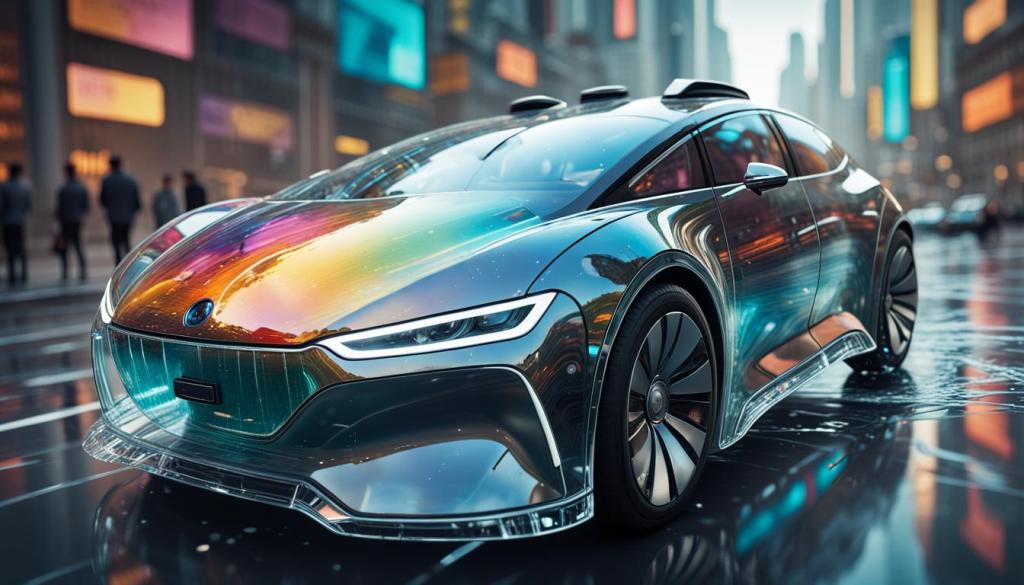
According to sources, the following cars have some of the best self-driving technology available:-
- Tesla Model Y: It is considered to have one of the most advanced self-driving technologies, featuring Autopilot with steering, accelerating, and braking abilities for the driver. Full self-driving allows the cars to navigate certain situations.
- Audi RS Q8: The car is highly rated for its features such as adaptive cruise control, lane departure warning, and automatic emergency braking.
- Cadillac Escalade: It is in the race of the best self-driving technologies due to its features such as Super Cruise, which allows the car to drive itself on certain highways.
- Genesis G90: The car is rated for its technology, equipped with features such as adaptive cruise control, lane departure warning, and automatic emergency braking.
- Mercedes-Benz EQS and S-Class: The demand of its technology is due to its features such as, Active Distance Assist that can automatically adjust the car’s speed based on traffic conditions, along with Active Steering Assist helping the car to be centered in its lane.
- Nissan Leaf: The car also left an impressive impressions due to its features such as ProPilot Assist, which helps the car stay centered in its lane and maintain a safe distance from other vehicles.
- Lexus LS: The car is highly rated due to its features such as Lexus Safety System+, including lane departure warning, automatic high beams, and adaptive cruise control.
- Audi A1 Sportback: Well, once again, a German car, and it’s well-known for its technology, equipped with features such as adaptive cruise control, lane departure warning, and automatic emergency braking.
- BMW iX: The Bavarian pride from Germany, is highly rated for its features such as Active Cruise Control with Stop & Go, automatically adjusting the car’s speed based on traffic conditions, and Lane Departure Warning.
- Volvo XC40: The Swedish car is highly rated for its Pilot Assist, which helps the car stay centered in its lane and maintain a safe distance from other vehicles.
- Ford F-150: One of the oldest manufacturers in the automotive industry is also not behind in the race for self-driving technology with features known as BlueCruise, which allows drivers to take their hands off the steering wheel while the system accelerates, brakes, and steers the vehicle within the lane.
- Volvo V60: A semi-autonomous driving system called Pilot Assist from the Swedish company, uses cameras and radar to help the driver maintain a safe distance from other vehicles and stay centered in their lane. The system also supports the driver in steering, accelerating, and braking the vehicle in certain conditions.
As we examine the race to be the best in their respective fields, we clearly have a variety of selections to analyze in order to declare the best among them. But will it be so easy? It all depends on the technology, but it’s also about the money.
After all, autonomous vehicles (AVs) were initially launched in the market with the elderly and handicapped people in mind. However, with the present scenario, the marketing is targeted towards a more sophisticated and luxurious lifestyle as well. As the demand for the best technology increases, so does the final price.
Even though, each of the automotive companies are showing their expertise in the arena of the self-driving technology, the several challenges faced by the automotive industry cannot be denied.
1. Perception and prediction – Self-driving cars need to accurately perceive and understand their surroundings using cameras, radar, and other sensors. However, detecting and classifying objects and predicting what they might do can be very difficult, especially in poor weather or unfamiliar environments.
For example, a 2018 report from McKinsey states that “the ability to predict behavior seconds into the future at the level of 360 degrees of perception defines the self-driving car and remains its most significant challenge.”
2. Safety and testing – Ensuring self-driving cars are safe before putting them on public roads at scale is tremendously difficult. Companies need to test their systems in a wide variety of situations, accumulating billions of miles of driving data according to a 2022 Consumer Reports article. However, even massive amounts of testing may be insufficient to guarantee safety.
For example, the fatal Uber and Tesla crashes involving self-driving technologies demonstrate the challenges with fully validating these systems.
3. Regulation and policy – Laws and regulations around self-driving vehicles are still evolving. According to a 2021 piece in Nature, policymakers are struggling with questions around “how to update safety regulations, how to allocate legal liability, and how to use infrastructure and planning policy to facilitate the adoption of autonomous vehicles.”
Getting these complex policy issues right is critical for the widespread adoption of self-driving cars.
4. User trust and acceptance – Many consumers do not yet trust self-driving technology, especially after crashes caused by autonomous systems. A 2022 J.D. Power survey found that consumer trust in automated driving systems has declined over the past few years.
Building user confidence and acceptance through robust education and demonstrating benefits will be key.
Even though challenges are persisting, what are the potential of self-driving technology in the automotive industry and how does it enhance the industry?
The key ways self-driving vehicles could improve transportation: –
Safety
- Self-driving cars could drastically reduce or even eliminate accidents caused by human error, which account for over 90% of car crashes today (NHTSA).
- For example, a 2021 study in Science Robotics analyzed self-driving tech and estimated it could reduce traffic deaths by up to 90%.
Accessibility
- By automating the driving task, self-driving cars could provide personal mobility to people unable to drive today, including people with disabilities or seniors.
- McKinsey estimates this could mean trillions in dollar value through increased productivity and participation.
Efficiency
- Automated driving functions like coordinated platooning could smooth traffic flow, reduce congestion, limit emissions from stop-go driving, and reduce fuel consumption.
- Consulting firm AT Kearney projects 300-600 million tons per year in CO2 savings globally.
Productivity
- By not needing a human to drive, automated vehicles would allow people to use ride time for work, rest, or leisure.
- This would limit unproductive time spent driving oneself and offer $100s of billions annually in regained productivity per Brookings.
As we examine the race to be the best in their respective fields, we clearly have a variety of selections to analyze in order to declare the best among them. But will it be so easy? It all depends on the technology, but it’s also about the money.
After all, autonomous vehicles (AVs) were initially launched in the market with the elderly and handicapped people in mind. However, with the present scenario, the marketing is targeted towards a more sophisticated and luxurious lifestyle as well. As the demand for the best technology increases, so does the final price.
In summary, self-driving cars with evolving technology and driving into an unknown zone of impossibilities turning into a possible dream is still facing critically unsolved technology, policy, and user experience problems before they can be successfully deployed at a global scale. Overcoming these challenges requires tremendous coordinated effort across industry, government, and society.
Materializing these potential societal benefits depends on the auto industry responsibly developing and validating self-driving systems to the point they achieve extremely high reliability and safety standards before deploying them at scale.
Establishing appropriate regulations will also be critical to make sure these powerful technologies are implemented safely. But if those challenges are responsibly managed, autonomous vehicle tech can meaningfully enhance transportation.
Sources:- what Car, US News, Jd power, acvacuations
 ledlights