

Before diving into knowing how IoT and AVs are interconnected. IoT (Internet of things) is a network of physical devices, vehicles, home appliances, and other items embedded with sensors, software, and connectivity that enables them to connect and exchange data. AVs are equipped with sensors such as cameras, LiDAR, and radar to collect data about the vehicle’s surroundings. The data is processed by AI algorithms to make correct decisions about the vehicle’s movement.

The capabilities of AVs are enhanced by IoT to provide real-time traffic updates for AVs to avoid congestion and take the most efficient route. The information provided by IoT about parking availability helps AVs find parking spots more easily. IoT is used for information about weather conditions and road conditions to support AVs in adjusting their driving behavior.
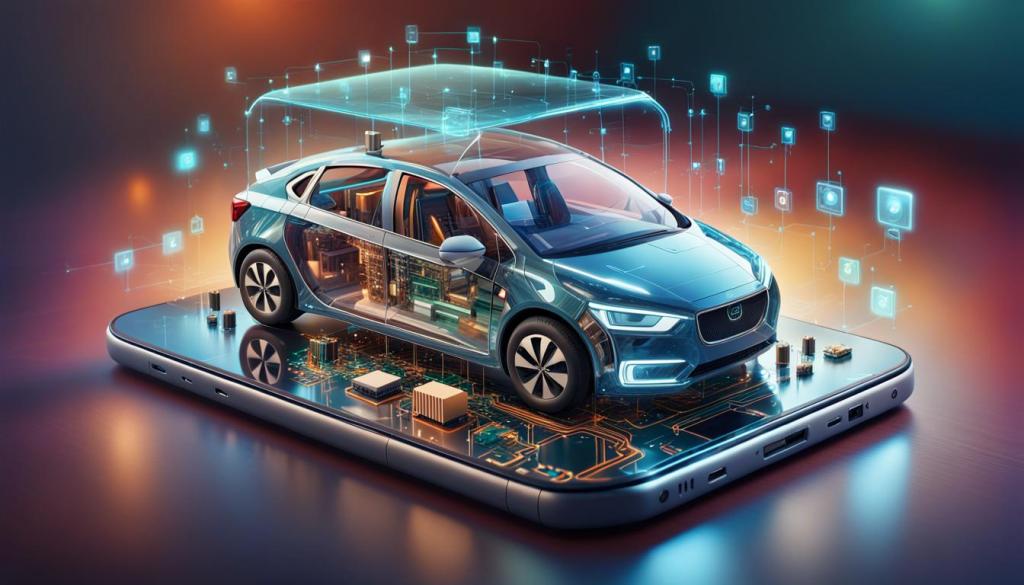
The capabilities of IoT can be enhanced by AVs due to data collected about road conditions, traffic patterns, and weather conditions. The data provides more accurate information about weather forecasts and traffic predictions. AVs are mainly used for collecting data about air quality and noise pollution in cities for monitoring and improving environmental conditions.

Examples of IoT in AVs playing a significant role include:
1. Air Quality Monitoring: IoT equipped with AVs can monitor air quality, and the sensors can measure various pollutants and provide real-time data on air quality.
2. Fleet Management: The fleets of AVs can be tracked and managed by IoT devices. Sensors and GPS technology provide real-time information on the location, status, and performance of each vehicle in the fleet.
3. Connected Infotainment Systems: IoT-enabled AVs provide passengers with infotainment systems with access to entertainment, navigation, and communication services.
4. Vehicle Diagnostics: IoT sensors also support monitoring the health and performance of AVs, such as detecting issues, engine problems, tire pressure, and battery status, allowing for proactive maintenance and repairs.
5. Smart Parking: Parking spaces are monitored by IoT sensors, providing real-time information on parking availability to help find parking spots more efficiently and reduce congestion.
6. Traffic Management: IoT sensors are used for monitoring traffic conditions and provide real-time data on traffic flow, congestion, and accidents. The information also optimizes route planning and improves traffic management.

Real-scenario examples of companies using IoT applications in AVs are: –
1. Predictive Maintenance: As per CNBC reports, Tesla vehicles use IoT connectivity to monitor vehicle diagnostics in real-time and predict when components like brakes or batteries may need service. This helps reduce downtime and allows for proactive repairs before potential failures strand drivers.
2. Over-the-Air Updates: As per Wired report, companies like Argo AI and Mercedes enable over-the-air software updates to continuously upgrade vehicle automation and AI systems without needing to go to the dealer. This allows remote refinement as the companies collect more test data
3. Vehicle-to-Infrastructure (V2I) Communication: As per Detroit News, the Michigan DOT and Cavnue are testing V2I systems that allow autonomous vehicles to exchange real-time data with smart infrastructure like traffic lights or construction zones for smoother, safer automated driving.
4. High-Definition Maps: As per VentureBeat report, companies like DeepMap and Luminar build live HD map layers using cloud integration and IoT vehicle sensors to support navigation, routing, and hazard detection for self-driving programs across leading automakers.
5. Data Collection: As per Ford report, Ford uses IoT connectivity to aggregate real-time driving data from test vehicles and simulation to continually enhance their autonomous vehicle AI training datasets.
The symbiotic relationship between IoT and AVs extends beyond convenience. AVs contribute valuable data to IoT systems, offering insights into road conditions, traffic patterns, weather forecasts, and environmental factors like air quality and noise pollution. This data, in turn, refines the accuracy of predictions and improves the effectiveness of IoT applications.
The integration of AI and IoT in AVs presents a promising future with enhanced safety, efficiency, and environmental monitoring, it also raises considerations regarding data privacy, security, and the need for robust regulatory frameworks. Striking a balance between innovation and addressing these concerns will be crucial as these technologies continue to reshape the automotive and transportation industry.
Sources:- AVNetwork, Springer Link, aws, builtin
 ledlights