
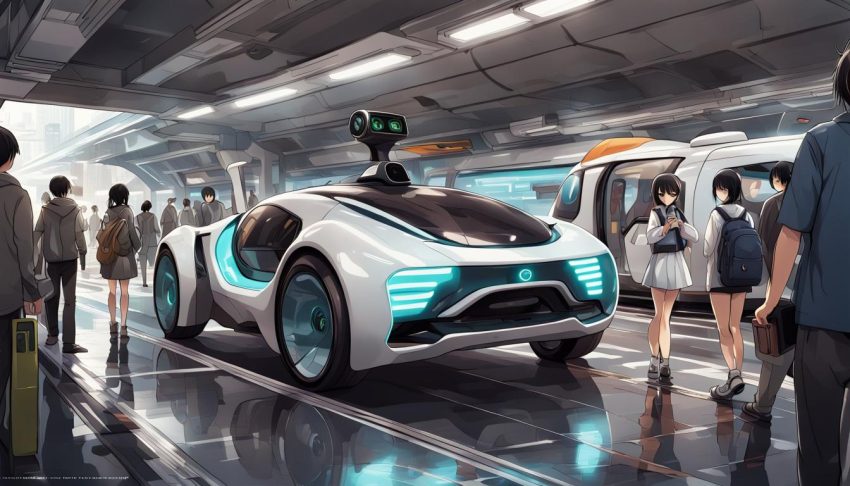
Autonomous vehicle disrupt everything….?? Uber disrupts the taxi industry, and driverless cars disrupt the Uber industry.
The advent of autonomous vehicle technology promises to usher in a revolution in personal transportation. As self-driving cars move from testing to widespread adoption over the next decade, they are likely to cause major disruptions across the transportation ecosystem while providing various economic, environmental, and safety benefits.
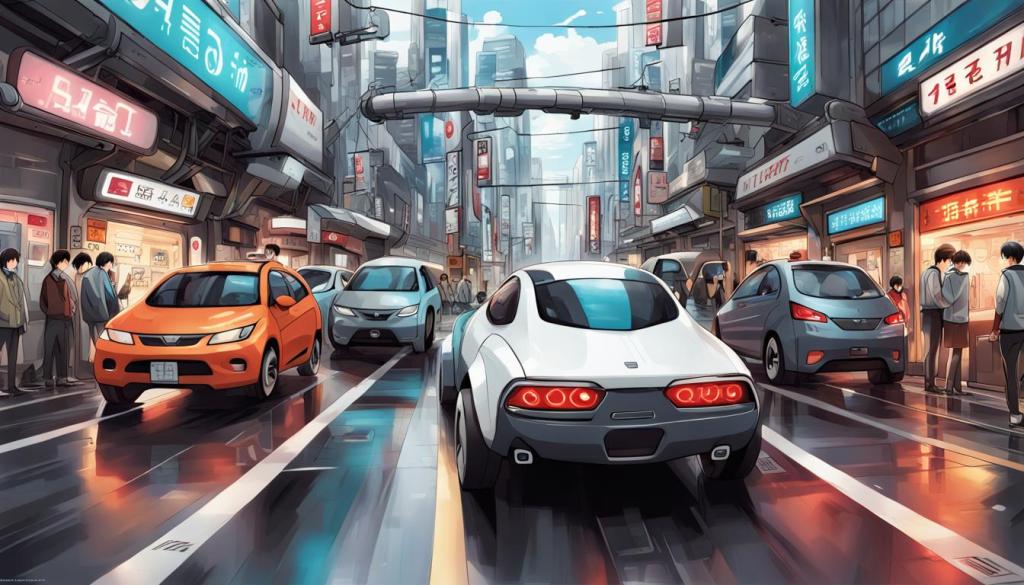
What do you think about the impact on the transportation industry by autonomous vehicles? Is it going to be positive, or will it be a change in the industry that nobody ever thought about?
The potential impact on the transportation industry is enormous. Today, over 270 million vehicles are registered in the United States. Autonomous vehicles could displace a significant percentage of these, especially privately-owned cars.
This creates a huge disruption in automakers, with a need for rapid innovation while simultaneously facing decreasing unit sales. Auto insurers and mechanics will also be negatively impacted by the improved safety and simpler maintenance of self-driving cars.
Meanwhile, shared mobility providers and public transportation need a quick response to changing ride preferences enabled by autonomous technology. New business models, such as robotaxi fleets, emerge while Uber and Lyft drivers face stiff competition from autonomous ride-hailing services, although widespread job losses are unlikely until the mid-2030s.
So, as we move from the industry, what about its effect and how it reshapes the cities?
Urban planners are anticipating autonomous vehicles to enable cities to be reshaped with less congestion and parking needs, as well as improved mobility options.
Autonomous transportation also reduces the number of personally-owned vehicles by over 60% in some forecasts. It also means cities that require less space for parking, freeing up room for parks, housing, business, or other development.
The congestion also decreases substantially, with studies showing a 10% adoption of autonomous vehicles in Austin, Texas, reducing travel delays by 50%. Vehicle automation is enabled by smarter, and connected traffic management, with cities redesigning roads to prioritize transit, pedestrians, bicyclists, still improving overall mobility.
The impacts of autonomous vehicles on the transportation industry over the years:
| Year | Impact |
| 2023 | Changing the way goods and people are transported, with autonomous vehicles being tested on public roads by major car manufacturers and technology companies. |
| 2025 | Expected to reduce accidents caused by human error and improve overall traffic flow. They also enable new business models, such as ride-sharing and on-demand transportation. |
| 2030 | AVs are projected to account for 92 percent of the U.S. automobile fleet, with semi-autonomous features becoming standard in most vehicles. They also have implications for urban planning and infrastructure development, such as reducing the need for parking spaces and creating more pedestrian-friendly spaces. |
| 2040 | AVs are transforming inter-city transportation, with high-speed rail and hyperloop systems becoming more feasible and affordable. A huge potential to create a more sustainable and clean-energy future, by reducing greenhouse gas emissions and fossil fuel consumption. |
What about safety? Well, as of now, AVs still need to prove their worth and their full domination in the autonomous vehicle sector. Over 90% of vehicle accidents are caused by human error, automating the driving task promises huge safety benefits.
Once autonomous vehicle technology matures, experts predict crashes to decline by 80-90%, saving tens of thousands of lives in the U.S. alone each year. A hugely promising future can be seen with self-driving cars avoiding driver errors like distracted, aggressive, or impaired driving, designed with more caution than humans.
As AVs are never impatient or tired, the AV network is also improving accident avoidance, response times, and traffic flow optimization. Nevertheless, the area of AVs being completely safe and delivering the high-level promise is still a big question, and something everybody is eager to wait and watch. When will it be truly possible?
The complications are too high for a vehicle to act independently with all safety alerts being raised high. The situations and scenarios need to be segregated or compartmentalized into different modes, and actions decided by the traveler on how they should act independently.
Complete autonomy needs to be provided to the traveler, as in, a two-way communication with the AVs, stating, “That’s how I want you to drive in the night scenario on a lonely road or in a lane with very few people or labeled as the road not safe to drive independently.”
How is it going to impact jobs? As we move into a futuristic market, we need to consider who can survive the transformation of the industry? Business, economics, and any new industry need to find ways to cut excessive costs while gaining more revenue.
The profit margin needs to be high for any business to thrive. Laying off has become a trend to maintain the financial strength of companies to last long in the cutthroat competition. It does pose a risk of job losses across the economy, but the most vulnerable jobs to be eliminated within the transportation industry are truck, taxi, and delivery drivers, with over 10 million workers in the US market.
Fears are presently high due to overblown and transitional phases; how autonomous technology can greatly reduce driver jobs once it matures, significantly impacting many workers without higher education.
However, new jobs such as remote vehicle operators, data analysts, and mobility managers would be created, offering more opportunities that may not offset losses. Proactive policies are highly needed to mitigate risks of disruption and ensure the benefits of vehicle automation are broadly shared through job retraining programs and social safety nets.
Finally, we can see the mobility transformation powered by autonomous vehicles promising consumers improved freedom, flexibility, accessibility, affordability, and productivity. Self-driving could also provide personal car-like convenience without the responsibilities of driving, enabling an expanded expansion for transportation to the disabled, elderly, young, and low-income groups.
Studies in the US also show that 30-50% of the population prefers not to drive themselves. Autonomous mobility services such as robotaxis and self-driving shuttles catering to their needs for utilizing in-trip productivity or entertainment unlock huge value, essentially recovering lost commute time in the era of extreme traffic congestion.
Predictions also vary on the effects of vehicle ownership, costs, and public transit use. Autonomous mobility also has a higher potential for delivering life-changing benefits to people and communities if it is thoughtfully managed rather than resisted.
A transformation in vehicle automation or in any industry brings immense opportunities alongside risks of disruption. Proactive planning and policymaking can reshape cities for people, not cars, greatly expanding mobility access, unlocking massive safety gains, and sparking sustainable growth. It remains imperative for public and private sector leaders to work together responsibly to steer this revolution towards serving societal needs.
Sources:- The Motley Fool, PTV group, Moments log, copperdigital, Enotrans
 ledlights