
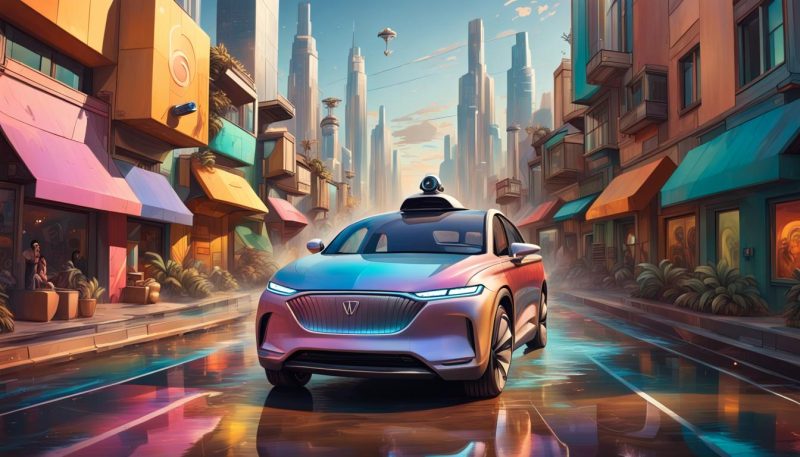
The future of driverless cars is the focus on the next segment of “Larry King Live.”
What do you think about it? Is it raising the competition bar high enough? The future of driverless cars is still unknown. Will it become an iconic hero or just a showpiece circling your lobby? It is still uncertain. What is driving me crazy is the transformation of the market, and it is still unknown which skills will become redundant and which ones will let you survive.
With the current test procedures and legal boundaries, the markets are quite limited for autonomous vehicles, and so is their future. While going through the latest trends and challenges of the future of driverless cars, here are some that caught my attention and made me wonder if the trend will become a disaster for most skill-oriented industries or a new avenue.
The trends of the future of driverless cars are:
- Driverless cars offer new features and services, such as mobile offices, entertainment rooms, and curbside pickups.
- Driverless cars increase safety, convenience, and productivity for consumers, especially for elderly and disabled people.
- Driverless cars disrupt the transportation industry by creating new business models and opportunities for automakers, suppliers, and tech providers.
- Driverless cars reduce greenhouse gas emissions and fossil fuel consumption, contributing to a more sustainable and clean energy future.
Even though driverless cars show a positive trendy future, what about their challenges?
- A need for cooperation between the AV and a human driver who does not follow the rules of the road or behaves unpredictably will be a huge hassle and stress for any electronic device.
- Ethical and legal questions will be raised by driverless cars that are responsible for accidents and for protecting data privacy.
- Driverless cars require significant infrastructure changes, such as dedicated lanes, smart traffic signals, and wireless communication networks.
- Driverless cars need to impact employment and social equity, as some jobs are lost or transformed and some groups are excluded or marginalized.
The future of traffic flow will also be impacted by driverless cars, such as:
- Driverless cars reduce accidents caused by human error and improve the overall traffic flow by communicating with each other and maintaining a consistent speed and distance from other vehicles.
- New features and services, such as mobile offices, entertainment rooms, and curbside pickups, could also increase the convenience and productivity of travelers.
- It also increases travel demand, especially on long-distance trips, providing more comfort and flexibility for passengers. It could lead to more traffic congestion and urban sprawl.
- A potential to disrupt the transportation industry, creating new business models and opportunities for automakers, suppliers, and tech providers requiring significant infrastructure changes, such as dedicated lanes, smart traffic signals, and wireless communication networks.
- It also leads to reduced greenhouse gas emissions and fossil fuel consumption, contributing to a more sustainable and clean-energy future and impacting employment and social equity, as some jobs are lost or transformed and some groups are excluded or marginalized.
In every B2C sector, consumers are the most important, and so are their opinions. Let’s check the opinions about driverless cars from different sources.
| Opinion | Percentage | Source |
|---|---|---|
| Support the introduction of driverless cars | 44% | Kennedys survey |
| Afraid to ride in a self-driving car | 75% | AAA survey |
| Want autonomous features in their next car | 59% | AAA survey |
| Scared to be driven by a computer | 71% | McKinsey consumer survey |
The key insights about the future analysis of driverless cars are:-
The key insights about the future analysis of driverless cars are:-
- Market Size: The autonomous car market is expected to reach USD 33.48 billion in 2023 and grow at a CAGR of 22.75% to reach USD 93.31 billion by 2028.
- Consumer Demand: Consumers want access to autonomous driving features and are willing to pay for them, according to a 2021 McKinsey consumer survey.
- Safety Benefits: Autonomous driving could reduce accidents caused by human error and improve overall traffic flow by communicating with each other and maintaining a consistent speed and distance from other vehicles.
- Environmental impact: Autonomous driving could reduce greenhouse gas emissions and fossil fuel consumption, contributing to a more sustainable and clean-energy future.
- Social implications: Autonomous driving could impact employment and social equity, as some jobs maybe lost or transformed and some groups may be excluded or marginalized.
- Ethical and legal challenges: Autonomous driving could raise ethical and legal questions, such as who is responsible for accidents and how to protect data privacy.
- Infrastructure requirements: Autonomous driving could require significant infrastructure changes, such as dedicated lanes, smart traffic signals, and wireless communication.
- Future features: Autonomous driving could offer new features and services, such as mobile offices, entertainment rooms, and curbside pickups.
Sources:- ScienceDaily, BBC, Forbes, Pew Research Center, i News, readwrite, defensivedriving, McKinsey & Company, Mashable, nextavenue, abc, University of Cambridge, Monash University, MordorIntelligence
 ledlights