

“5G IoT use cases in the Automotive industry …….. The 5G network will be used for vehicle to vehicle communication and to tell you that you have 5 bars of service but zero missed calls.”
An inevitable rapid transformation is seen in the automotive industry, fueled by the convergence of 5G and IoT technologies. 5G IoT is used to describe the combination of 5G and IoT technologies, enabling new applications and use cases for connected devices.
5G is the next generation of cellular networks, offering faster speed, lower latency, higher reliability, and more connectivity than previous generations. The importance of 5G and IoT is supporting various scenarios, such as vehicle-to-everything communication, autonomous driving, connected infotainment, smart manufacturing, smart supply chain, and smart service.
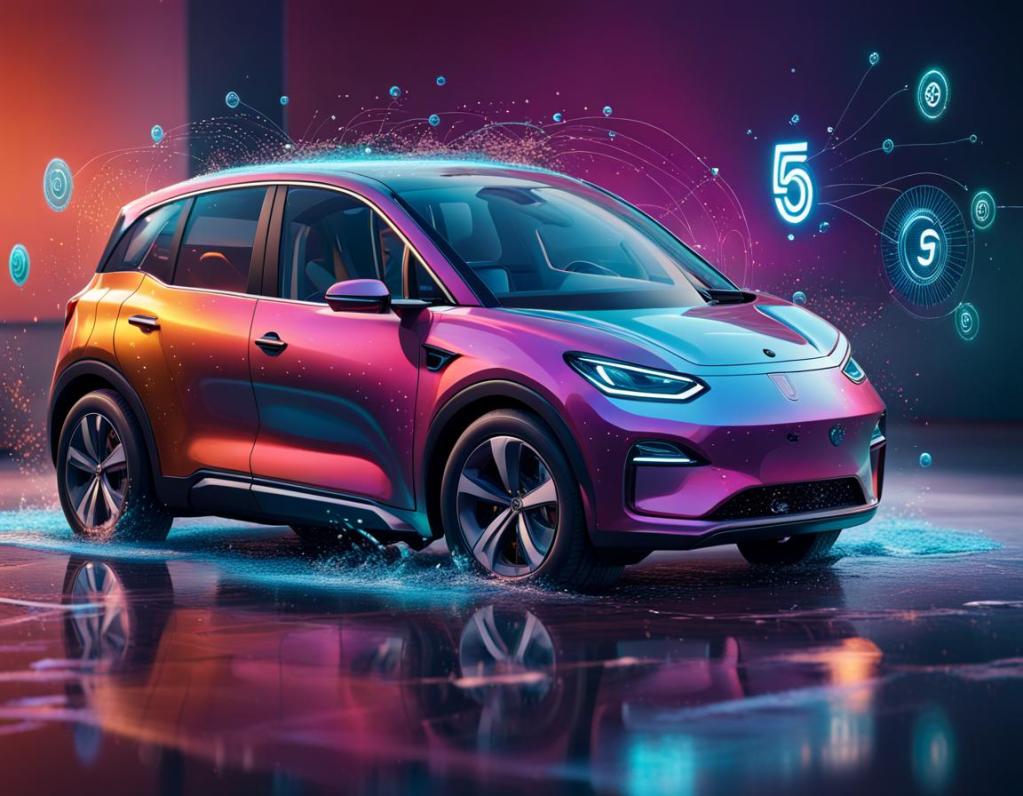
“5G in the automotive industry is not just about connectivity; it’s the driving force behind a transformative journey, revolutionizing safety, efficiency, and innovation on the road. It’s not just about speed; it’s about redefining the entire driving experience, paving the way for intelligent vehicles that communicate, navigate, and operate seamlessly, ultimately shaping the future of mobility.”
Let’s evaluate the 5G and IoT use cases for connected vehicles:
In simple terms, connected vehicles are refer to the vehicles that can communicate with each other, rather than infrastructure, networks, and pedestrians, using cellular vehicle-to-everything (C-V2X) or other wireless technologies such as Wi-Fi, Bluetooth, and dedicated short-range communications (DSRC). It also enhances safety, efficiency, convenience, and entertainment for drivers and passengers.
The use cases of 5G and IoT in connected vehicles are:
- Vehicle-to-everything (V2X) communication.
- V2X communication allows vehicles to share information about their location, speed, direction, and surroundings with other road users and infrastructure.
The main reason is to improve traffic flow, reduce collisions, and enable cooperative driving. For example, V2C communication allows vehicles to sense obstacles beyond their line of sight, while V2I communication enables smart traffic management and parking.
5G supports V2X communication with low latency, high reliability, and wide coverage. An example of V2X communication is the C-V2X project in China, aiming to deploy 5G-based V2X services in 27 cities by 2023, covering more than 30, 000 intersections and 100, 000 vehicles.
Autonomous driving is a major area with the ability of vehicles to drive themselves without human intervention using sensors, cameras, artificial intelligence, and navigation systems.
The major use of 5G is enabling autonomous driving by providing high-speed data transfer, low latency, and edge computing, enhancing the situational awareness and decision-making abilities of the vehicle.
An example of autonomous driving is the 5G Automotive Association (5GAA), a global cross-industry organization promoting the development and deployment of 5G-based solutions for connected and automated mobility.
In the case of connected infotainment, it is an integration of entertainment, information, and communication services in the vehicle, such as music, video, navigation, voice assistants, and social media. 5G-enabled connected entertainment provides high bandwidth, low latency, and seamless connectivity, supporting high-quality streaming, interactive gaming, and cloud-based applications.
For example, the Harman Ignit 5G platform is a cloud-native solution leveraging 5G to deliver personalized, immersive, and intelligent experiences for drivers and passengers.
The autonomous ecosystem consists of various stakeholders involved in the design, production, distribution, and maintenance of vehicles, such as manufacturers, suppliers, dealers, and service providers.
The automotive ecosystem can benefit from 5G and IoT by improving efficiency, quality, and innovation. Some of the use cases for 5G and IoT in the automotive ecosystem are:
- Smart manufacturing is the application of digital technologies, such as IoT, cloud analytics, and artificial intelligence, to optimize the manufacturing process in areas such as design, production, quality control, and logistics. 5G enables smart manufacturing to provide high-speed, low-latency, and reliable connectivity, supporting real-time monitoring, control, and optimization of the manufacturing process.
For example, the Ericsson and Audi partnership uses 5G to enable automated guided vehicles, augmented reality, and quality inspection in the Audi production plant in Germany.
- Smart supply chain is the application of digital technologies, such as IoT, cloud analytics, and blockchain, to optimize supply chain processes such as sourcing, transportation, inventory, and delivery. 5G enables high-speed, low-latency, and reliable connectivity, supporting real-time tracking, tracing, and verification of the supply chain process.
For example, the IBM and Daimler collaboration uses blockchain to track the origin and lifecycle of cobalt, a key material for electric vehicle batteries.

“In the automotive industry, the synergy of IoT, cloud, and AI isn’t just technological integration; it’s a symphony orchestrating the future of mobility. With interconnected devices, boundless data in the cloud, and the intelligence of artificial minds, we are witnessing the birth of vehicles that transcend transportation—they become smart entities, anticipatory companions, and pioneers of a new era in automotive excellence.”
- Smart service is the application of digital technologies, such as IoT, cloud computing, analytics, and artificial intelligence, to optimize the service process, such as diagnosis, maintenance, and repair.
For example, the Bosch and Mojio partnership offers a connected car service that monitors the vehicle’s health, alerts the driver of any issues, and connects them to nearby workshops.
The main interesting point of 5G and IoT is their ability to enhance safety, efficiency, convenience, and entertainment for drivers and passengers. It improves productivity, quality, and innovation for manufacturers, suppliers, dealers, and service providers.
According to Gartner’s report, the automotive industry will be the largest market opportunity for 5G IoT solutions, representing 53% of the total 5G IoT endpoint market in 2023.
Sources:- Contus tech, Ericsson, zdnet, appinventive, GSMA, emnify, Digi
 ledlights