

In EV batteries, recycling and circular economy are important concepts, supporting the cause of reducing the environmental and social impacts of battery production and disposal and enhancing the security and sustainability of battery supply.
The process of recycling means recovering and reusing valuable materials from used or discarded batteries, such as lithium, cobalt, nickel, and manganese. The recycling process also helps in reducing the demand for raw materials, lowering the cost of production, and mitigating the environmental and social impacts of battery disposal. It also helps in creating new revenue streams and employment opportunities for the battery industry.
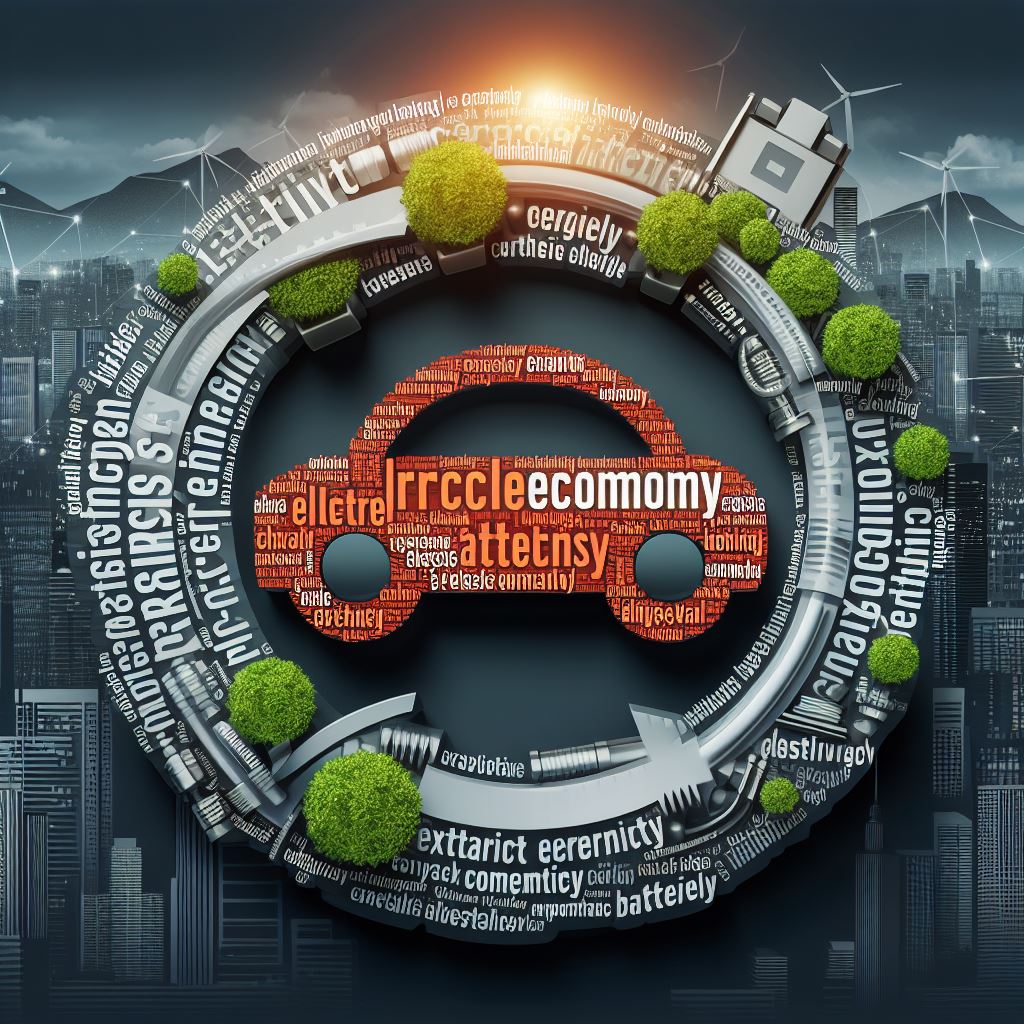
In a circular economy for electric vehicles (EVs), there’s a focus on maximizing resource efficiency. This means designing EVs with the intent of reusing, refurbishing, and recycling components to minimize waste. It involves a shift from the traditional linear “take-make-dispose” model to a more sustainable and circular approach.
What about the Circular economy?
It is a system aiming to eliminate waste and maximize the value of resources by designing, producing, and using products in a way that they can be reused, repaired, remanufactured, or recycled. In the context of EV batteries, a circular economy would involve recycling or reusing batteries at the end of their first life in an electric vehicle. It would reduce the need to extract new raw materials and would also help to prevent environmental pollution from battery disposal.
It helps create a more resilient and efficient battery supply chain by extending the lifespan of batteries, optimizing the use of battery capacity, and creating new business models and services for battery reuse and recycling.
It is a system aiming to eliminate waste and maximize the value of resources by designing, producing, and using products in a way that they can be reused, repaired, remanufactured, or recycled. In the context of EV batteries, a circular economy would involve recycling or reusing batteries at the end of their first life in an electric vehicle. It would reduce the need to extract new raw materials and would also help to prevent environmental pollution from battery disposal.
It helps create a more resilient and efficient battery supply chain by extending the lifespan of batteries, optimizing the use of battery capacity, and creating new business models and services for battery reuse and recycling.

Circular economy principles emphasize designing products for longevity. In the context of electric vehicles, this involves creating durable and upgradable components, allowing for easy repairs and maintenance. Extending the lifespan of EVs helps reduce the need for frequent replacements, ultimately lowering the overall environmental impact.
Let’s deep dive into “The Case for a Circular Economy in Electric Vehicle Batteries” by BCG,
- A circular economy for electric vehicle (EV) batteries could generate $10 billion in revenue opportunities by 2030.
- Recycling all those batteries is more economically attractive than repurposing them for a “second life.”
- The next generations of automotive products must be successful both commercially and environmentally.
The environmental benefits of recycling or reusing batteries are clear among them, better use of resources and lower carbon emissions. The economics of recycling EV batteries at scale are attractive, but generating profits from reuse, known as “second life” applications will be harder than it is imagined. Direct-to-recycling is also a favored route in the circular economy in the near term.
Hence, the recommendation for Automakers is to design batteries that are easier to recycle or reuse. However, as the statement looks simple, is it so simple and direct? I don’t think so, but continuous research and having a mindset towards such development may provide a fruitful result.
Investment in recycling infrastructure by Governments can create regulations encouraging responsible battery disposal. New business models for second-life applications by battery manufacturers.
The problem of creating a successful circular economy for EV batteries are:-
- High cost of recycling batteries.
- Lack of standardized recycling processes.
- Difficulty of resuing batteries in new applications.
- Also, the right awareness among the EV battery manufacturer is needed, and the right utilization.
- The skillful people for the application and development of recycling batteries.
- The knowledge to understand the demand and analyze the approach of circular economy and sustainability.
- Finding alternate ways for second-life applications of battery.
The growing demand for sustainable products, increased popularity of electric vehicles and the development of new and more efficient recycling technologies can be seen as the major opportunities.
Sources:- bcg, financialexpress, energypost, financialexpress
FAQs
What is the circular economy, and how does it relate to EV batteries?
The circular economy is an economic system aimed at eliminating waste and promoting the continual use of resources. In the context of EV batteries, it involves recycling and reusing materials to extend the lifecycle of batteries and minimize environmental impact.
Why is recycling EV batteries important?
Recycling EV batteries is crucial for several reasons, including reducing environmental pollution, conserving valuable resources (such as lithium and cobalt), and minimizing the need for raw material extraction.
What materials are typically found in EV batteries, and which ones are recyclable?
EV batteries typically contain materials like lithium, cobalt, nickel, and other metals. These materials are recyclable, and recycling them helps recover valuable resources for reuse in new batteries or other applications.
How is the recycling process for EV batteries different from traditional recycling methods?
Recycling EV batteries involves specialized processes to extract and separate valuable materials like lithium, cobalt, and nickel. These processes may include shredding, chemical leaching, and refining to recover metals in a form suitable for reuse.
What are the challenges associated with recycling EV batteries?
Challenges include the complexity of battery chemistries, the need for specialized recycling infrastructure, and ensuring safe handling of hazardous materials. Additionally, there are economic challenges related to the cost-effectiveness of recycling compared to primary resource extraction.
How can the circular economy benefit from recycling EV batteries?
The circular economy can benefit from recycling EV batteries by reducing the demand for new raw materials, minimizing waste, and creating opportunities for the reuse of recovered materials in various industries beyond automotive, thus promoting a more sustainable and resource-efficient economy.
What innovations are driving advancements in EV battery recycling?
Innovations include new recycling technologies that improve efficiency and resource recovery rates, as well as initiatives focused on designing batteries for easier disassembly and recycling at the end of their life.
What role do regulations and policies play in promoting battery recycling and the circular economy?
Regulations and policies can incentivize battery recycling through measures such as extended producer responsibility (EPR) schemes, recycling targets, and incentives for using recycled materials in new products.
How can consumers contribute to the circular economy for EV batteries?
Consumers can contribute by properly disposing of old batteries at designated recycling facilities, supporting products made with recycled materials, and advocating for policies that promote battery recycling and the circular economy.
What are some potential future developments in EV battery recycling and the circular economy?
Future developments may include advancements in recycling technologies, increased collaboration among stakeholders in the battery value chain, and the emergence of new business models focused on circularity and resource efficiency.
 ledlights