
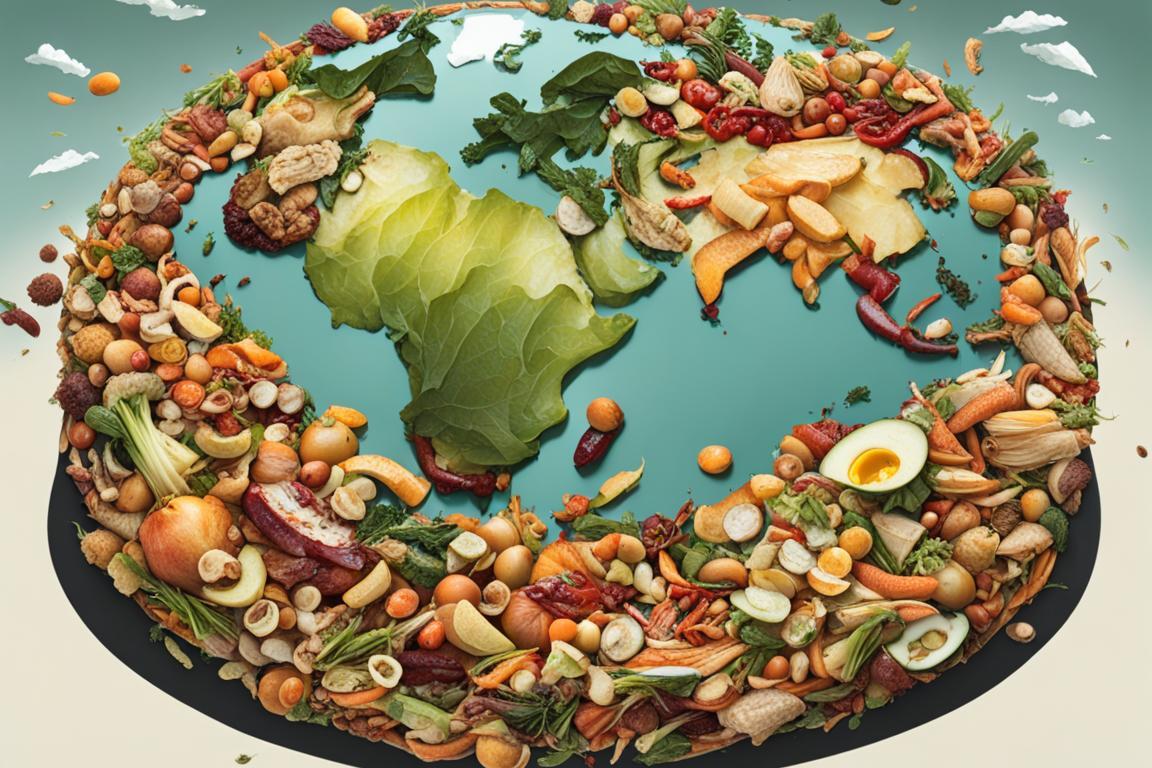
First, let’s see what food waste means after all.
Food waste, also referred to as food loss and waste, is the decrease in quantity or quality of food along the food supply chain that prevents it from being consumed by humans. It encompasses a wide range of situations, from crops lost in the field to unbeaten leftovers on our plates.
Food waste or loss usually means food that is lost before reaching the retail stage due to factors such as spoilage, pests, or inadequate storage.
Hence, it is important to understand the gaps leading to food waste in the food supply chains and also the contribution from our end to solve the problem of food waste.
At first, food waste contributes to climate change as it generates greenhouse gas emissions from the production, transportation, and decomposition of food.
What is the history of food waste?
A glimpse into the journey of the history of food waste: –
Early Societies: –
- Hunter-gatherer communities, facing scarcity, prioritize efficient consumption and minimal waste. Food was also seen as a precious resource, and every edible part was utilized.
- With the rise of agriculture, food waste began to provide the form of crop losses due to unpredictable weather, pests, and inadequate storage techniques.
Medieval Era: –
- Food shortages and famines were common but wastage within households was rare. Communities also developed methods such as pickling, preserving, and drying to extend the shelf life of food.
- Religious and cultural values are emphasized due to resourcefulness and encouraged with leftovers for other meals, animal feed, or compost.
Industrial Revolution: –
- It brought significant changes to food production and consumption. Mass production leads to increased food availability, but also waste in the form of processing byproducts and discarded imperfections.
- Urbanization and reliance on commercial food systems increase the distances between farms and tables, leading a higher spoilage rates and loss during transportation and storage.
20th Century: –
- World wars and other conflicts caused food shortages, leading to a renewed focus on preventing waste and promoting efficient consumption. Rationing programs are implemented by Governments and community gardens are encouraged.
- However, post-war economic prosperity and technological advancements led to a “throwaway culture” in developed nations. Cheap and abundant food resulted in increased consumerism and less attention to waste reduction.
Present Day: –
- A global issue is Food waste, with an estimated one-third of all food produced being wasted.
The journey narrated the struggle of the problem of food waste not erupting at a single point in time but rather evolving alongside human civilization. Early societies primarily faced challenges of food security and limited resources; modern times confront the issues of overabundance and inefficient resource management.
The historical context of food waste develops more effective solutions for a sustainable future.
According to nutritionstudies, food waste accounts for approximately 8%–10% of global greenhouse gas emissions. The reduction of food waste helps in mitigating climate change by avoiding these emissions. Next, food waste and valuable resources such as land, water, energy, and labor are also used to produce food.
About one-third of all food produced globally by weight is lost or wasted between farm and fork, amounting to more than 1 billion metric tons of food. Food waste reduction helps conserve resources and use them more efficiently and sustainably. Also, food waste affects food security and nutrition, as it reduces the availability and affordability of food for the growing population.
According to nutrition studies, food loss and waste could also feed 200 million people in Europe and 300 million people in Africa. Food waste reduction also helps improve food security and nutrition for low-income consumers and vulnerable groups.
The technologies to help with tracking and monitoring food supply chains are:-
- Barcodes can help identify and track products at different stages of the supply chain, such as production, processing, distribution, and retail.
- RFID devices can provide more detailed and accurate data than barcodes, such as the location, temperature, and shelf life of products.
- IoT devices can be embedded in products, equipment, or vehicles, and can provide real-time data on the condition and performance of products and processes, such as the weight, moisture, ripeness, and freshness of products.
- Blockchain applications can enable the traceability of products and materials from farm to fork, by creating a digital record of every transaction and interaction in the supply chain, that can be verified and accessed by authorized parties.
Even though Technology seems to be a route. It is not just a path for the integration with the human and social aspects of the food supply chain, such as the culture, behavior, and preferences of the farmers, processors, distributors, retailers, and consumers.
Sources:- igps, foodsafetytech, mdpi, Springer Link, United Nations, FAO, wri
FAQs
Q: What is food waste, and why is it a problem?
Food waste is food that doesn’t reach consumers due to various factors throughout the supply chain. It’s estimated that one-third of global food production is wasted, leading to environmental and economic issues.
How can technology support reducing food waste by tracking and monitoring food supply chains?
Technology can support reducing food waste by tracking and monitoring food supply chains, which are the processes and activities that involve the production, distribution, and consumption of food.
Technology can enable the collection, transmission, and analysis of data on various aspects of food supply chains, such as food quality, quantity, location, temperature, humidity, or shelf life.
Technology can also provide insights and recommendations for optimizing food supply chains, such as reducing food loss, improving food safety, or enhancing food efficiency.
How can technology help reduce food waste?
By tracking and monitoring the food supply chain, technology can identify and address causes of waste, optimize storage and transportation, and predict demand to avoid overproduction.
What technologies are used for tracking and monitoring food supply chains?
Examples include:
- Internet of Things (IoT): Sensors track temperature, humidity, and other factors affecting food quality during storage and transportation. IoT sensors can be attached to food products, packages, or containers, to monitor their condition and freshness, and alert the stakeholders of any anomalies or risks.
- Blockchain: This technology creates a secure, transparent record of food origin and journey, improving recall efficiency and preventing contamination. Blockchain can be used to create a traceable and trustworthy record of the origin, movement, and status of food products along the supply chain, and prevent fraud, tampering, or mislabeling.
- AI: AI can be used to analyze and interpret the data collected by IoT sensors or blockchain, and provide insights and recommendations for reducing food waste, such as predicting food demand, optimizing food inventory, or enhancing food quality.
- Smart labels: These labels incorporate sensors that monitor food freshness and can adjust pricing based on proximity to the expiry date.
How does tracking and monitoring reduce food waste?
It allows for:
- Improved demand forecasting: Predicting consumer behavior can help producers adjust production to avoid oversupply.
- Optimized storage and transportation: Real-time data helps manage storage conditions and optimize delivery routes, minimizing spoilage.
- Efficient recalls: Faster identification of contaminated products minimizes harm and reduces wasted food.
- Dynamic pricing: Adjusting prices based on expiry dates encourages consumers to buy discounted nearing-expiry products.
Are there any challenges in utilizing these technologies?
Yes, some challenges include:
- Cost implementation: Integrating technology throughout the supply chain can be expensive for smaller businesses.
- Standardization: Lack of consistent standards across the industry can create data incompatibility issues.
- Data privacy: Concerns around data security and privacy need to be addressed for widespread adoption.
What is the future of technology in reducing food waste?
As technology advances, we can expect further development in:
- Artificial intelligence (AI): AI can analyze data and predict potential waste points, leading to more efficient interventions.
- Advanced sensors and packaging: Innovations in sensor technology and smart packaging will provide even more real-time data and extend shelf life.
- Consumer education: Integrating technology with consumer education can promote informed choices and reduce household food waste.
Where can I learn more about this technology and its positive impact?
You can explore resources from organizations like the World Economic Forum, the Food and Agriculture Organization (FAO), and various food waste-focused NGOs.
 ledlights