
Solene Cornilleau is a founder of Concrete Garden. Currently, she resides in Taipei. She is an Environmental Educator & Urban Gardening Specialist. She believes in inspiring action through educational programs & garden-based learning initiatives.
Q: Tell me about yourself and your journey in the Sustainability sector. What inspired you with Concrete Garden?
Solene Cornilleau: My journey started when my friend noticed that I loved being surrounded by plants and suggested I go live in the suburbs instead of downtown Taipei City.
I first thought it was a good idea indeed but then slowly started reflecting on the impact that would have this decision not only on my life but also on the environment.
I quickly came to the conclusion that if everyone could leave the city because of the lack of green spaces, the greener suburban areas would very soon become highly urbanized (back then, I didn’t know the term urban sprawling).

I also realized cities were often commonly considered the opposite of nature due to their lack of green spaces and biodiversity. Further reading and reflection made me understand that people are attracted by cities for their job opportunities, culture, and decision-making power while lots of people would also leave it for a better environment (less pollution, less stress, quieter).
Instead of moving to the suburbs, I wondered: So what if cities were greener? Could that protect the surrounding nature from urban sprawling whilst making urban dwellers feel better? I would personally stay.
This was the start of my project Concrete Garden.
Q: Why Taipei? What made you move from France?
Solene Cornilleau: I moved to Taipei 15 years ago because I wanted to live abroad. I started Concrete Garden 7 years ago in Taipei because I was living there.
Q: How are you creating a need for green spaces in densely populated cities like Taipei?
Solene Cornilleau: I didn’t create a need, there was one at first. People might not want to do gardening but they do want green spaces because it looks/feels good. I often say that a concrete garden doesn’t answer to a demand, it answers to a necessity.
I experimented a lot in the first 5 years to figure out what would work best in Taipei. As I was a teacher (French was a foreign language back then), I was more inclined to do something educational so I first offered gardening workshops for adults in both English and Chinese.
It worked well especially as it was organized as a collaboration with restaurants and cafes. Eventually, 3 years ago, I started teaching gardening in schools. Depending on the school, I am a gardening teacher (it is a compulsory subject or an after-school activity), a plant science teacher, and an environmental educator (introducing the SDGs in my course).
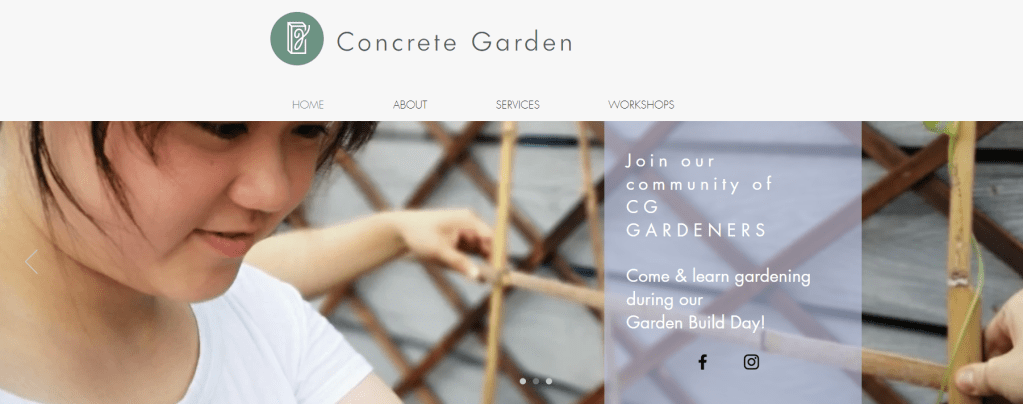
I noticed that teaching a younger crowd had a bigger impact and more engagement from adults (their parents for instance) as they could see their children able to teach them how to identify, grow, and use plants.
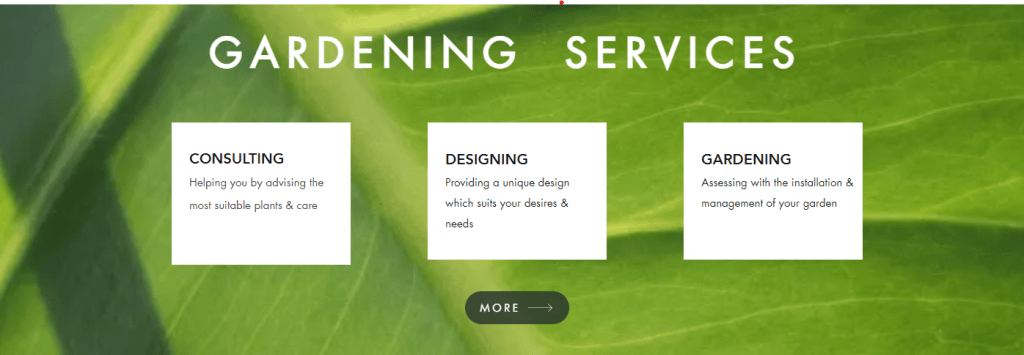
I also offer consulting and garden design services for companies and families. Urban environments can be very challenging for plants and requires a good understanding of plants’ needs.
Q: What challenges are addressed by Concrete Garden? How does Concrete Garden overcome them?
Solene Cornilleau: How to motivate city people to get their hands dirty and do gardening. I think in cities, that’s the biggest challenge. If people work from 9 to 5, Monday to Friday, they don’t have the energy nor the will to take care of plants. Also, gardening is a commitment.
That’s what most people don’t realize: most garden projects will stop because nobody wants to take care of it in the long term, no matter the size of the garden. We all have experienced having that one dead plant at home because we forgot to water it, haven’t we?
Q: How do you encourage people to incorporate herbs into everyday cooking?
Solene Cornilleau: Growing herbs is one of the first requests from a lot of customers who want to start having a little garden. I either offer an introduction to herbs in the kitchen (set up as a workshop).
Otherwise, based on what they usually cook and their garden’s environment (sun exposure and wind for instance), I will recommend a selection of herbs they could grow and use.

As an educator in the school, the herb topic goes way further: we not only grow herbs, but we use them in the school or bring them back home as a harvest, cooked dishes, or crafted herbal remedies.
Q: How do you differentiate Concrete Garden from your competitors? What innovative solutions do your customers like? Are there ways that some tips from Concrete Garden can be useful in India?
Solene Cornilleau: My versatile skills and interests as well as years of experience in education and horticulture for urban environments.
Q: What is your vision for the future of urban gardening?
Solene Cornilleau: It is already becoming a global movement.
Q: How does the Concrete Garden promote Biodiversity within urban environments?
Solene Cornilleau: The techniques applied in every garden that I create / work in are the most sustainable and biodiversity-friendly possible as they should be.
Q: What people in India can learn from Concrete Garden? Why is it important in 2024?
Solene Cornilleau: There is no need to leave because the grass looks greener elsewhere. Stay and make your space a better place.
Thank you.
Subscribe for more such interesting interviews from different parts of the world.
 ledlights