
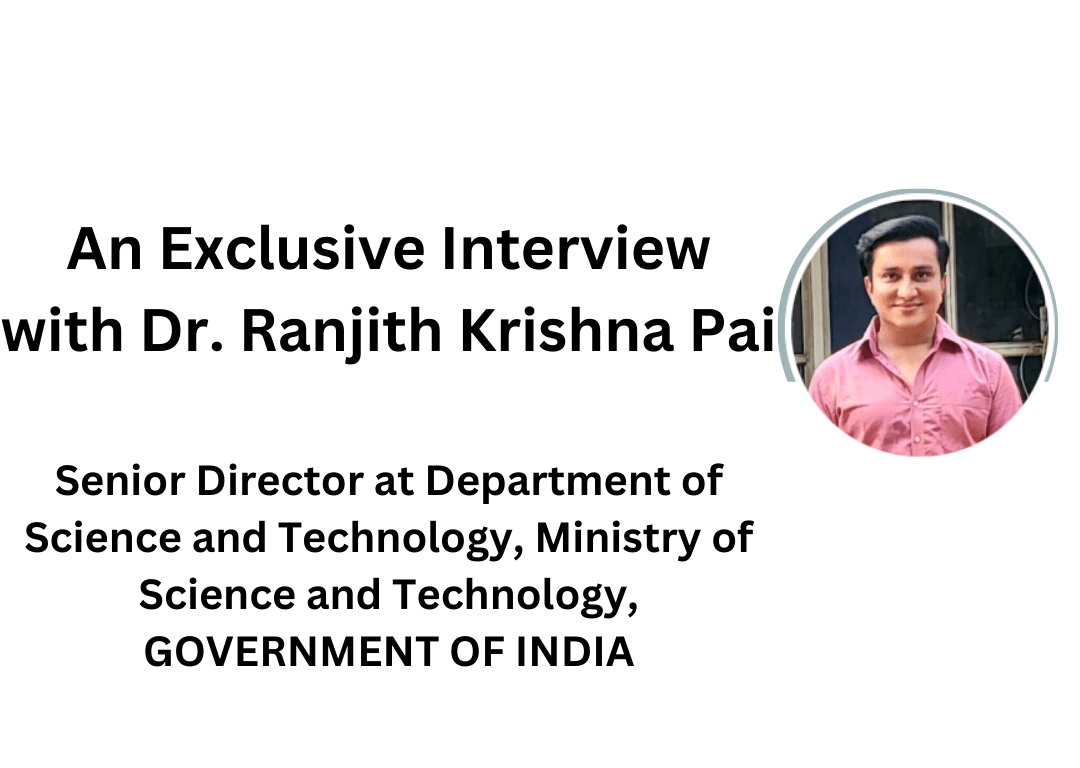
Exclusive interview with Senior Director at Department of Science and Technology, Ministry of Science and Technology, Government of India, Dr. Ranjith Krishna Pai.
Dr. Ranjith Krishna Pai is an experienced scientist with a demonstrated history of working in the National & International Research Laboratories and Centers. Dr. Pai is skilled in Nanomaterials, nanofabrication, and polymer chemistry.
Dr. Pai got his Ph.D. in Chemistry from Ulm University, Germany.
Q: What we can know about the Green Hydrogen growth in India?
Dr. Pai:
India’s green hydrogen growth is driven by strategic initiatives and significant investments, positioning the country as a potential global leader in this sector. The National Green Hydrogen Mission, launched in 2021, aims to meet 25% of the nation’s hydrogen demand from green sources by 2030.
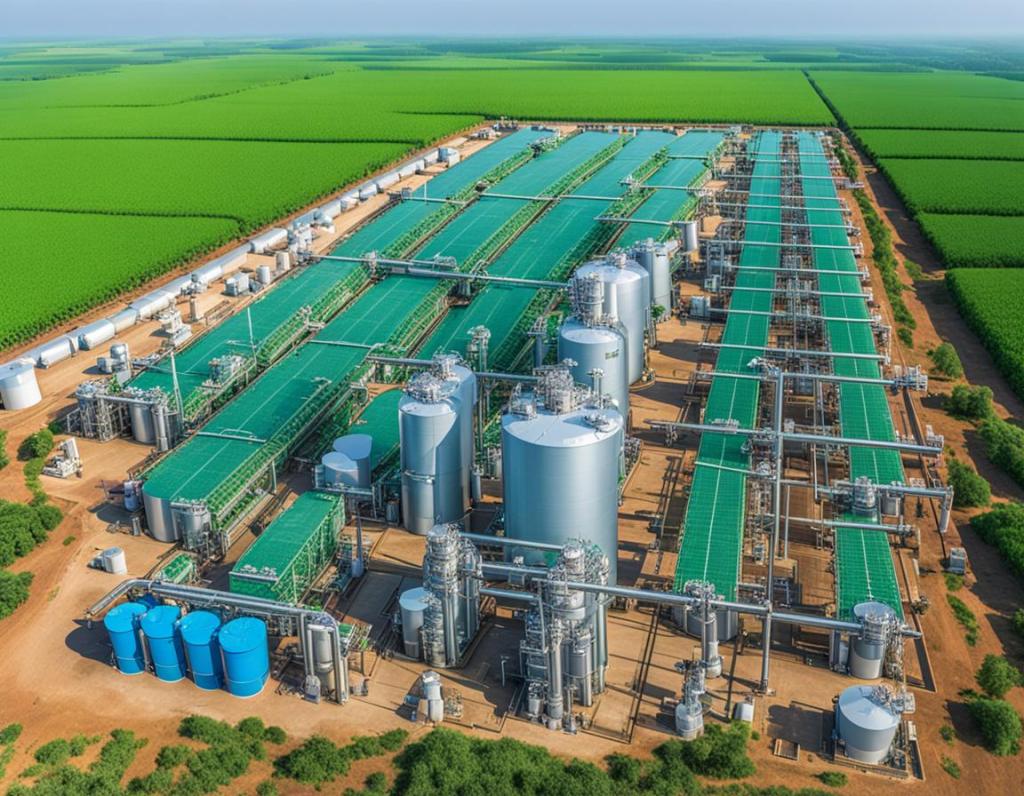
A $2 billion incentive plan and a target to cut production costs by 20% within five years underscore the government’s commitment. Leveraging abundant solar and wind resources, India is well-placed to produce green hydrogen via electrolysis and biomass, essential for decarbonizing sectors like steel, refining, and transportation.
Despite high electrolyser costs, India aims to produce 5 million metric tonnes of green hydrogen annually by 2030, with renewable energy investments projected to surge by 83% in 2024.
International collaborations with countries like Japan, Germany, and Australia are enhancing technology transfer and joint research, while domestic industrial giants are embarking on large-scale green hydrogen projects.
The government is fostering a supportive regulatory environment with subsidies, tax incentives, and hydrogen hub development. This holistic approach not only promotes sustainable energy but also enhances energy security and supports global climate goals, reflecting India’s concerted effort to transition to a greener future and establish itself as a global green hydrogen hub.
Q: What is the future milestone for the growth of Green Hydrogen growth in India?
Dr. Pai:
The National Green Hydrogen Mission (NGHM) has several goals, including:
- Green hydrogen production: Developing an annual production capacity of at least 5 million metric tons (MMT) of green hydrogen
- Renewable energy: Adding around 125 gigawatts (GW) of renewable energy capacity
- Decarbonization: Significantly reducing the economy’s carbon footprint
- Fossil fuel reduction: Reducing India’s reliance on fossil fuel imports
- Technology leadership: Establishing India as a leader in green hydrogen technology and markets
- Global hub: Making India a global center for green hydrogen production, use, and exports
- Job creation: Creating 600,000 jobs by 2030
Q: Can you shed light on the role of collaboration between countries in the growth of Green Hydrogen in India?
Dr. Pai:
International collaboration is crucial for India’s green hydrogen growth, facilitating the sharing of knowledge, technology, and best practices. This global partnership approach is embodied by initiatives like the “Indo-French Roadmap on the Development of Green Hydrogen,” which aims to merge the hydrogen ecosystems of France and India, leveraging their respective strengths in renewable energy and hydrogen technologies.
Such alliances enable the standardization of hydrogen production, storage, and transport technologies, creating a unified market and regulatory framework. For instance, the Global Biofuel Alliance and the Strategic Hydrogen Innovation Partnership (SHIP) are pivotal in establishing global standards and fostering R&D for green hydrogen.
Countries leading in hydrogen technology, like Japan, Germany, and Australia, are collaborating with India, bringing financial resources, technical expertise, and access to global markets. These partnerships are essential for building infrastructure, reducing costs through economies of scale, and overcoming challenges like high electrolyser costs and resource scarcity.
Moreover, collaborative efforts in policy-making and regulatory frameworks can standardize and streamline the green hydrogen sector, facilitating trade and investment. Platforms like the International Renewable Energy Agency (IRENA) and bilateral agreements help create a conducive environment for green hydrogen growth.
In summary, international collaboration enhances India’s capabilities, accelerates technological advancements, and provides a robust framework for the sustainable growth of the green hydrogen sector, positioning India as a leader in the global hydrogen economy and contributing to global decarbonization goals.
Q: Which part of India can be seen growing massively in the Green Hydrogen sector?
Dr. Pai:
Gujarat is emerging as a major player in India’s green hydrogen sector, thanks to its unique combination of strengths. The state’s abundant renewable energy resources, particularly solar and wind power, provide a solid foundation for green hydrogen production via electrolysis.
Gujarat’s well-developed infrastructure, including major oil refineries, petrochemical plants, and an extensive gas pipeline network, further supports hydrogen production and distribution.
The proactive stance of the Gujarat government has been instrumental in this growth. Initiatives such as the planned green hydrogen park in Kutch, which will encompass production, storage, and transportation facilities, along with various incentives and subsidies, have created a conducive environment for green hydrogen projects.
This support has attracted major companies like Reliance Industries, Adani Group, and Indian Oil Corporation, which are investing in large-scale green hydrogen projects in the state.
Gujarat’s strategic location, with its vast coastlines, enhances its suitability for developing hydrogen production facilities. The state’s industrial base, including refineries, fertilizers, and chemical plants, provides a ready market for green hydrogen, aiding efforts to reduce carbon emissions.
In summary, Gujarat’s renewable energy potential, robust infrastructure, supportive government policies, and significant upcoming projects position it as a leading hub for green hydrogen in India. The state’s initiatives not only contribute to India’s energy transition but also serve as a model for other regions aiming for sustainable growth and carbon neutrality.
Several states in India including but not limited to Maharashtra, Rajasthan, Karnataka, Odisha, Gujarat, Punjab, and Uttar Pradesh have launched Green Hydrogen policies.
Green Hydrogen projects sanctioned are: Jindal Stainless’ first green hydrogen project in India, Haryana, and a 10 MW plant at GAIL in Vijaipur, MP will produce 4.3 tonnes per day of green hydrogen to be utilized as fuel for the plant equipment.
Q: What’s your personal opinion on green hydrogen growth as compared to Li-ion battery technology?
Dr. Pai:
Both green hydrogen and lithium-ion (Li-ion) battery technologies are crucial for the future of clean energy, each addressing different facets of the energy transition.
Green hydrogen excels in decarbonizing hard-to-electrify sectors such as heavy industry, aviation, and shipping, thanks to its versatility and the ability to be produced from renewable sources, stored, and transported relatively easily.
Conversely, Li-ion batteries are highly efficient for energy storage, essential for adopting electric vehicles (EVs), and stabilizing grid energy from intermittent renewable sources like solar and wind, due to their quick response times and high energy density.
However, challenges remain for both technologies. Green hydrogen production is currently more costly and energy-intensive compared to other fuels, and its infrastructure is still under development. Li-ion batteries face issues related to raw material sourcing, recycling, and environmental impact.
A complementary approach leveraging both technologies is the most effective path forward. Integrating green hydrogen and Li-ion batteries can enhance energy security, reduce emissions, and support a sustainable energy landscape.
Green hydrogen can cater to sectors needing high energy density and long-range capabilities, while Li-ion batteries can continue to advance EV adoption and residential energy storage.
The combined growth potential of these technologies is immense, with each playing a pivotal role in the global transition to a sustainable energy future.
Q: Any key message for the Youth in the sustainability sector?
Dr. Pai:
To the youth in the sustainability sector, your role in shaping our planet’s future is immensely impactful. Sustainability is a critical imperative for our survival, not just a buzzword.
As young professionals, your fresh perspectives and innovative ideas can drive significant change and inspire others. Remember, sustainability is about people and their relationship with the environment, prioritizing social equity and environmental justice for a more just and sustainable world.
Education and continuous learning are paramount. Stay informed about the latest advancements in sustainable technologies, policies, and practices.
Engage in interdisciplinary studies, as sustainability intersects with various fields. Be proactive and entrepreneurial, taking risks and starting initiatives that can drive change. Your innovative ideas, whether through startups, research, or community projects, can shape the future.
Collaboration with diverse groups, including businesses, governments, and NGOs, is key to creating holistic and just energy transition solutions. Networking and partnerships amplify your impact and provide valuable insights and resources.
Remember this quote “The planet is not inherited from our ancestors instead it’s borrowed from our children” so always choose the most sustainable way to accomplish any task.
Thank you for your time.
Stay tune for more such cool interviews.
 ledlights