
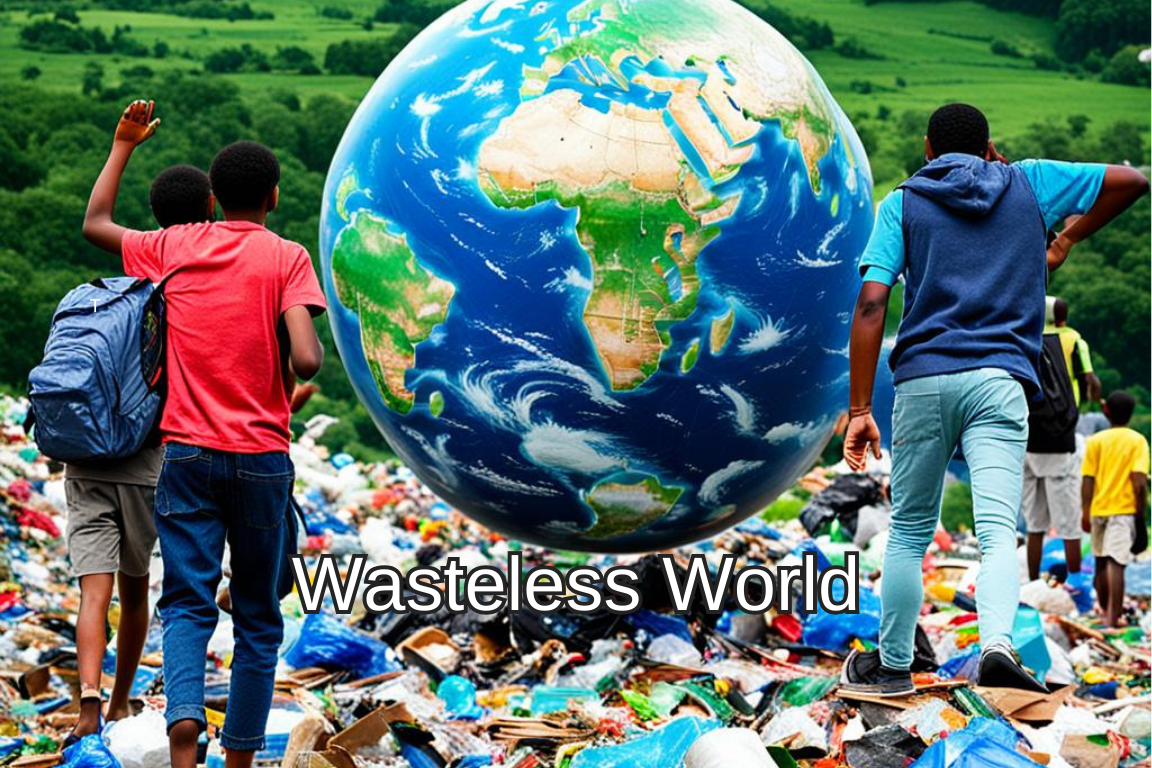
What is a wasteless world?
Have you ever come across the term “wasteless world”? What exactly will society look like in a wasteless world?
As we move closely, we see a change and a demand in the world, to protect the earth, by using waste and creating products.
How far are we? Are we protecting the earth from such waste or creating a market where the waste has become a gold-digging mine or a profitable venture?
According to Skyquestt,
“Global Waste Management Market size was valued at USD 1.29 Trillion in 2022 and is expected to grow from USD 1.36 Trillion in 2023 to USD 2.07 Trillion by 2031 at a CAGR of 5.4% during the forecast period (2024-2031)”.
According to Fortune Business Insights,
“The global industrial waste management market size was valued at USD 1.05 billion in 2023. The market is projected to grow from USD 1.10 billion in 2024 to USD 1.79 billion by 2032, exhibiting a CAGR of 6.22% during the forecast period”.
According to Oizom,
10 areas or even sectors are identified, as the most polluting industries in the world.
“Today, there are around 30 billion internet-connected devices in the world. If this figure continues to grow, it’s estimated that the IT industry could use 20% of all electricity produced by 2025 and emit up to 5.5% of the world’s carbon emissions.”
With Google search, Waste has become an industry, waste management study, or even market waste.
You also got studies and research directed towards, waste, or even postgraduate studies on handling the waste.
However, in the entire process, do we get to see anything related to waste being minimized? The movement of handling the waste is important. We need to study the entire thing, but in this entire system, are we able to minimize the waste?
Currently, our waste industry has become so profitable, that is questionable whether are we generating more waste to turn it into a treasure. The market for waste management is huge. It is not even in thousands but in billions.
The market is creating entrepreneurship and also employment. Isn’t it? Different expo and also types of machinery to handle the waste, however, in-depth, have we been able to handle the final waste, if we did, then the waste market should be minimized, and the wasteless world should be a billion-dollar sector.
Wasteless world
According to Michael Rada,
The principles of Industry 5.0 are for preventing waste with the use of the framework, and it applies to every person.
The dependency on third-party investments is also cut down.
The waste has been categorized as,
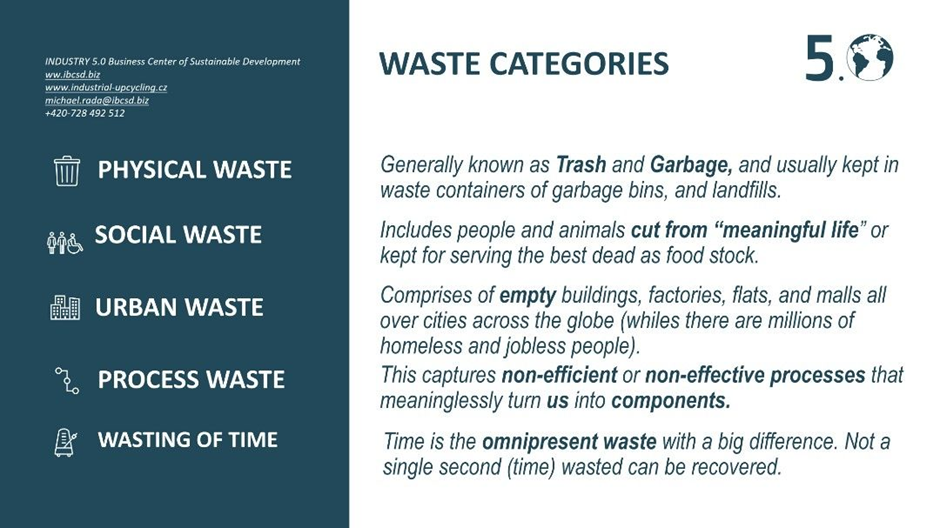
And the policies to prevent the waste,
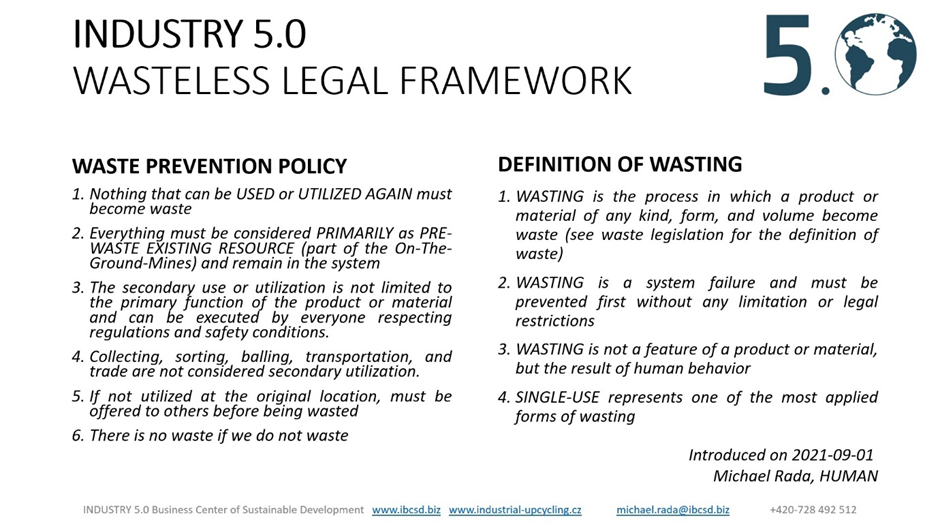
You can check Michael Rada’s webinar over here.
Well, the industry of waste is highly attractive, after all, we are working with an agenda and subconsciously we are happy to be contributing to a greener world.
However, behind the screen, and once those rose lenses of the perfect future world are removed, do we see a market with a waste prevention goal or a market with the ability to create more waste?
After all, if all the waste is minimized, how will you generate the products? Or even any services related to B2B or B2C.
In the world of Kodak cameras with a limited number of reels, the photos were also taken limited with precautions and a sense that some may be without any head or legs.
However, we had a sense not to waste and also not to waste time.
In the world of digital cameras, with endless scopes, the sense of not wasting time in capturing photos is also minimized. We were happy, as now there was no need to worry about reels being finished, take 100, and select one of the best.
But has there been anything like perfect best?
Isn’t it the madness of wasting time and being tied to an illusion of endless time to keep clicking till the best suits your eyes?
Are we not losing the sense of identifying which can become waste and which not?
And here comes the thing with “sense”. Are we in the right sense to see what exactly is going around the world is correct or not? Maybe the initiative was purpose-driven and minimized the waste, it might have served the purpose and solved the issues.
However, has the baggage been stretched to become a profitable market? Don’t we need to bring that sense, and say it will be “wasted” and hence, stop producing more trash that’s been converted into a profitable market?
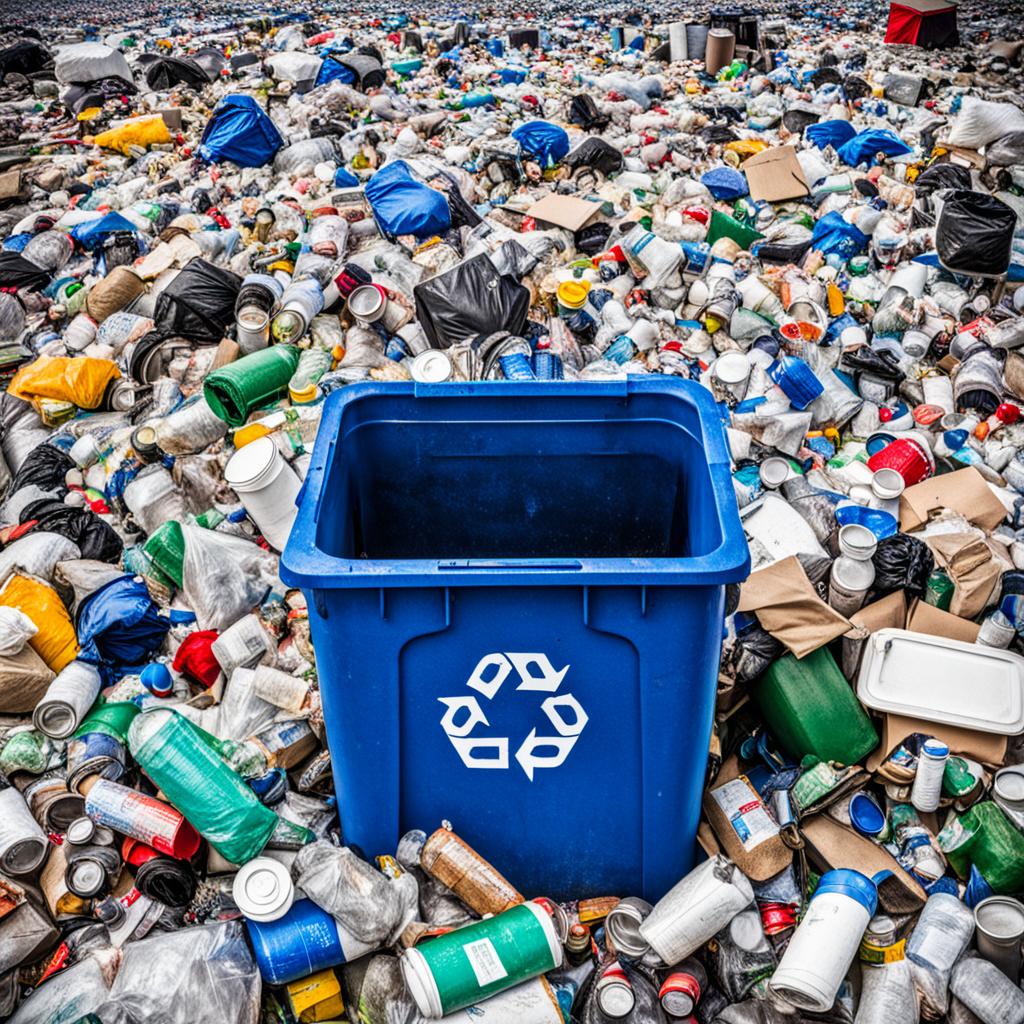

Some of the daily practical tips of reducing waste:-
- Identify the habits that is creating more waste on a daily basis rather than reducing it.
- Identify the use of products that can be recycled in various ways.
- Use of multipurpose products to reduce the purchasing habit of more and more. It is infinite, more is always less.
- Identify the use of food materials that is getting wasted more due to less consumption or is of no importance.
- Use of less plastics as carry bag rather than adopting a healthy habits of carrying your own bags.
- The ways of recycling of old metal products or even plastic products on a long term basis and reduce the final waste till it become of no use at all.
- The first and most important thing is also to identify, the need of purchasing those plastic items that are generating more waste.
- Use of paper bags more on a daily basis to get rid of the waste. Or even use of old papers or newspapers to get rid of the daily waste.
- Identify the over production.
to here…..

 ledlights