
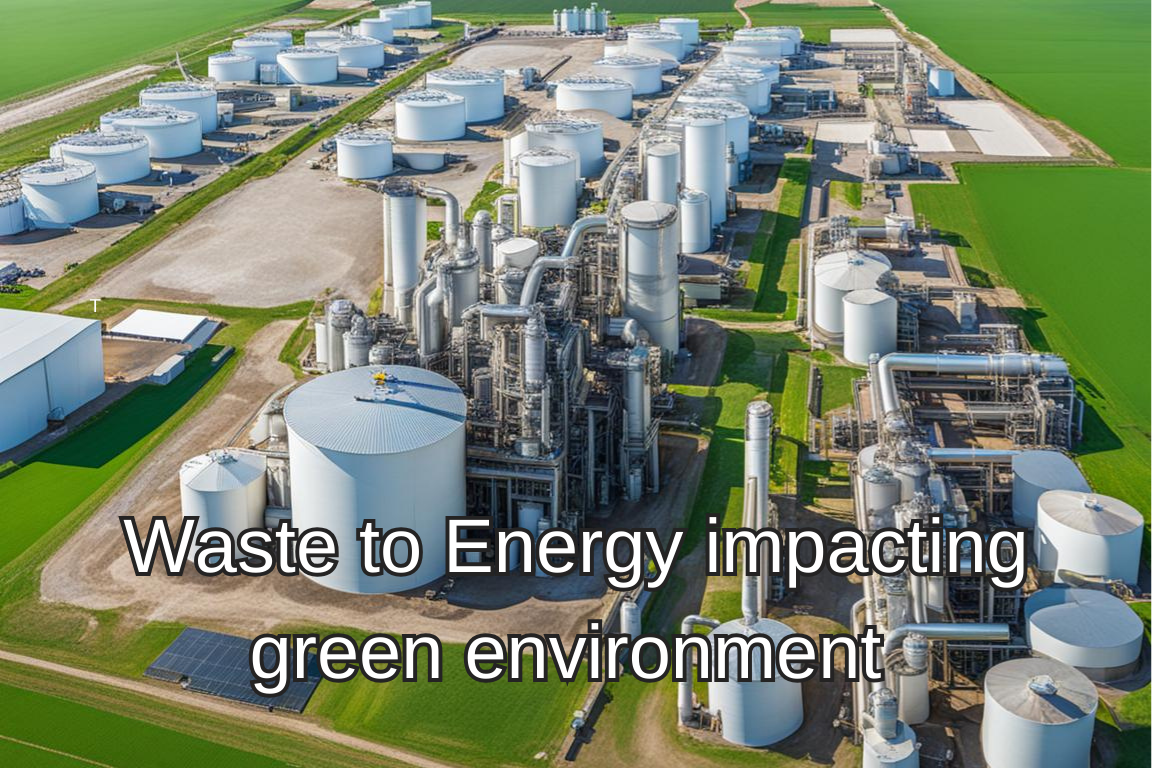
How WTE impacting green environment?
Well, the days of waste that were seen as worthless entities are gone. Today, the waste costs billions of dollars. If you have the idea of how to turn waste into energy, you have the next Ambani empire.
However, how far is the statement true that waste turns into a golden duck?
What is the Waste-to-Energy (WTE) process?
It is a process where waste materials are converted into energy with the use of methods such as incineration, pyrolysis, gasification, and anaerobic digestion. (Well, if you don’t know each of these terms, then google it up; just don’t rely on Microsoft search; the days look quite dark on the search engine platforms.) Or else you can just keep reading the post.
Back to Waste to Energy offers a solution to manage waste with the catchy word “reduce greenhouse gas emissions, as well as waste that is recycled or managed.

According to the International Energy Agency (IEA), the global waste-to-energy market is expected to reach $12 billion by 2025. WTE is one of the growing industries with an increasing demand for waste management services.
The benefits that are offered by WTE technologies, such as reducing greenhouse gas emissions and waste management practices, are improved and also create jobs. The use of advanced pyrolysis technology produces biofuels, chemicals, and other valuable products.
A wide range of waste streams such as municipal solid waste, industrial waste, agricultural waste, and construction and demolition waste are included in the conversion of waste to energy.
Incineration is one of the most common methods of WTE that involves burning waste materials to produce heat and energy.
Pyrolysis involves breaking down organic waste materials into carbon dioxide and hydrogen that uses high temperatures. Gasification involves converting organic waste materials into a synthesis gas that uses fuel to convert it into other products.
Anaerobic digestion involves breaking down organic waste materials in the absence of oxygen for producing biogas, used as a fuel or converted into other products.
As per a recent published article, the print,
Waste-to-energy with a catchy phrase turns out to be not as the rose-painted picture looks like. A story of the Timarpur Okhla waste-to-energy plant, touted as a solution to Delhi’s mounting solid waste problem, seems to be a burden for tens of thousands who are residing at the near location.
As per the reports, “ the Okhla waste-to-energy plant is equipped with a flue gas cleaning system, which when combined with proper combustion, ensures that emission standards are maintained. The plant also has a leachate treatment facility.”
However, the residents complained about the health hazards such as children suffering from adenoids, worsened by pollution. Elderly people suffer from chronic sinusitis and respiratory issues and need to rely on antibiotics and air purifiers for relief.
The plant was in partnership with Jindal Urban Infrastructure Ltd on a Public Partnership model. The plant burns high calorific value of waste to generate power of 23 MW from 1,950 metric tonnes of MSW daily.
The plants were fined by the Delhi Pollution Control Committee for environmental norm violations. The location of the plant violates Ministry guidelines for distance from residential areas where the residents reported noise and air pollution, stress, and sleep disturbances.
Nivit Yadav of CSE states that the plant is emitting harmful pollutants, exacerbating respiratory and cardiovascular diseases.
What are the hazards associated with the Waste of Energy?
- Air pollution is one of the primary concerns associated with WTE where the waste materials are burned out to release harmful pollutants into the atmosphere, such as particulate matter, sulfur dioxide, nitrogen oxides, and volatile compounds. The pollutants have serious health impacts such as respiratory problems, cardiovascular disease, and cancer.
- Noise pollution is also due to significant noise pollution that can be a nuisance to nearby communities.
- Water pollution also contaminates such as heavy metals, pesticides, and pharmaceuticals that are released into waterways during the WTE process. It leads to damaging the ecosystem and harm aquatic life.
- Soil contamination is due to waste materials such as heavy metals, and leaching soil during the WTE process.
- Fire Hazards due to incineration and pyrolysis operations present fire hazards, if the waste materials are highly flammable.
- Health risks due to pollutants released during the WTE process pose health risks to workers, nearby communities, and wildlife.
- The WTE operations are cost-efficient as it is expensive and inefficient due to waste materials are not properly sorted if the technology is not well-suited as per the type of waste being processed.
Waste-to-energy technology is a promising technology offering a range of benefits such as reducing greenhouse gas emissions, waste management practices been improved and also creating jobs.
 ledlights