

HEV or PHEV?
The evolutionary nature of the automotive industry is dynamic, but how about sustainable and efficient? Are they sustainable enough for consumers to be faced with an increasing array of choices when electrified vehicles are in the picture?
Till the time we start and end our debate, we have a new industry of electric vehicles in the automotive sector, and they are just about one thing, but with different variants: hybrid electric vehicles, plug-in hybrid electric vehicles, and also full electric vehicles.

The improved fuel efficiency and reduced emissions compared to conventional internal combustion engine vehicles with distinct characteristics make it the most suitable depending on specific needs and circumstances.
What is the difference between PHEV and HEV?
Plug-in hybrid electric vehicles are internal combustion engines with an electric motor and a larger battery pack charged by plugging into an external power source.
Hybrid electric vehicles are a combination of conventional internal combustion engines with an electric motor and a small battery pack. The electric motor supports the gasoline engine during acceleration and at low speeds, where the battery can be recharged through regenerative braking.
Advantages of HEVs over PHEVs
- Lower First Cost
The buy price is quite low for HEVs as compared to PHEVs due to their smaller battery packs and less complex powertrain systems. The HEVs are attractive to a broader range of consumers with an interest in reducing fuel consumption and emissions without significant upfront investments.

2. Simpler Operation
Any change in driving habits or more infrastructure is not required in HEVs. The need to plug them in or search for charging stations is a burdensome task.
3. No Range Anxiety
The HEVs rely primarily on their gasoline engines and hence an all-electric mode with battery or charging infrastructure issues are less burdensome for drivers.
HEVs are the apt vehicle for long trips or areas with limited charging infrastructure.
4. Lower Maintenance Costs
The smaller battery pack of HEVs provides the flexibility of lower maintenance with a less complex electrical system. It also shows that the repair or replacement is less for the components.
5. Better Fuel Efficiency on Highways
A lot of time is spent on highways by drivers, HEVs are more fuel-efficient than PHEVs.
But the all-electric vehicle concept is quite jeopardized, with the dependency on fossil fuels still luring out the benefits of green vehicles. It can be healthy if an alternate fuel or green fuel is used in the HEV, or hybrid electric vehicle.
The concept of HEV gets an upper hand over the PHEV or even an all-electric vehicle.
Advantage of PHEVs over HEVs
1.All-Electric Driving Ability:
The ability of PHEVs to offer pure electric power for a limited range of up to 20–50 miles, covering most daily commutes. The drivers are supported by features like reducing gasoline consumption and emissions for short trips.
2. Lower Operating Costs:
In cities or places that are well equipped with charging stations, PHEVs are helpful for regularly charging up the vehicles and using the all-electric mode.
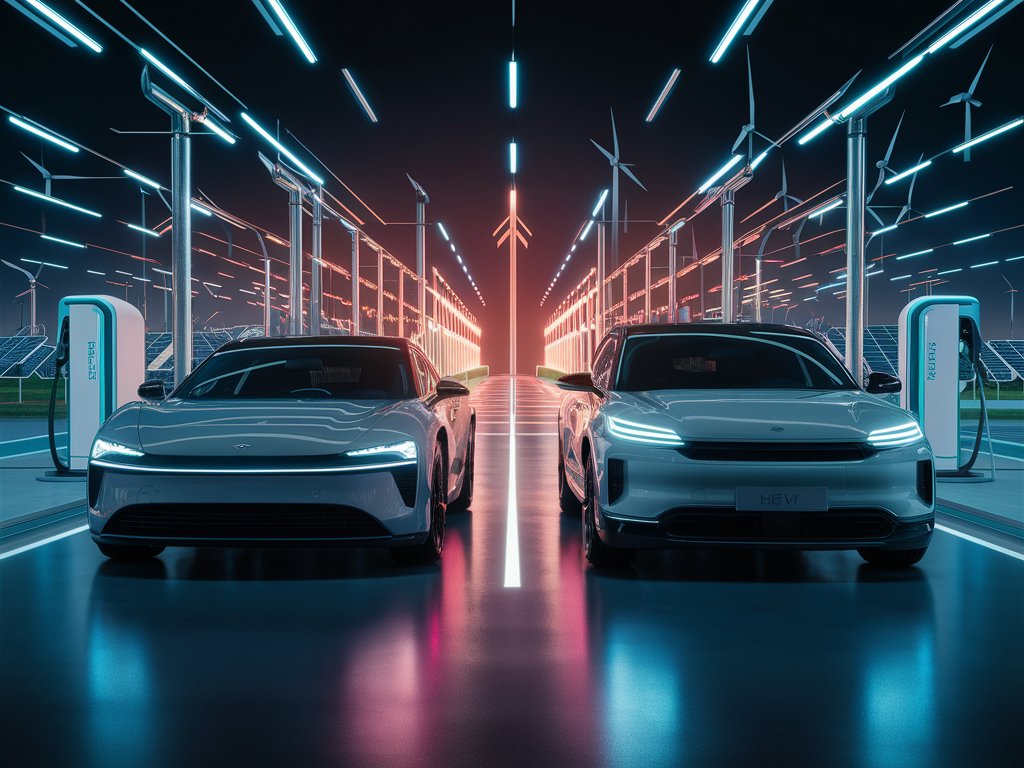
As compared to gasoline, electricity is much cheaper on a per-mile basis, even when it is charged at home during off-peak hours.
3. Greater Fuel Savings:
The potentiality of PHEVs is great in terms of fuel savings, especially for drivers with short daily commutes who can finish most of their trips on electric power alone.
4. Government Incentives:
More generous government incentives and tax credits are offered in PHEVs with good rebates as compared to HEVs.
Well, PHEVs definitely suit the label “Go Green Vehicle,” and if the electric vehicle charging infrastructure is properly set up in the target areas and zones, then the PHEVs are the best ones to experience the all-electric vehicle effect.
But if electric charging stations are all set up properly at the designated location, then why go for PHEV, unless and until it is cost-effective over the fully electric vehicle?
Which is better Suited: HEV or PHEV?
In my opinion, it is up to your budget and the convenience of the charging stations to satisfy the need for an electric vehicle.
After trying myself an electric vehicle, I love EVs due to the no noise, high acceleration, smooth backing up with no gear tension, and very smooth and effortless driving without worrying about engine issues.

The only challenge is with the charging infrastructure; once they are all set up at a proper distance and location, there is no way that EVs are not going to replace the mode of transportation.
PHEVs are best suited for short commutes within the city and also for quick rides home.
Top HEV models
- Toyota Prius
- Honda Accord Hybrid
- Hyundai Sonata Hybrid
- Toyota RAV4 Hybrid
- Lexus ES Hybrid
Top PHEV models
- Toyota RAV4 Prime
- Chrysler Pacifica Hybrid
- BMW X5 xDrive45e
- Volvo XC60 Recharge
- Ford Escape PHEV
Sources:- Kotak general insurance, PCMag, EVgo, aptiv, Exclusively Hybrid, Alternative Fuels Data Center
 ledlights