
An exclusive interview with Dr.Likharev, the founder and CEO of Waste-To-Energy, a startup company that develops gasification technology to convert municipal solid waste into synthesis gas and further to electricity or other useful products like sustainable fuels, chemicals or hydrogen.
Dr. Sergey Likharev, holds a Ph.D. in Physics, an MBA from Cornell University, and certifications in supply chain and transportation from APICS. He is also passionate about the global environmental challenges related to waste disposal and a firm believer in circular economy that benefits society and the planet.
He is also a serving member of the Board of Directors for a well-regarded group of seaport companies, mentoring emerging managers, and lecturing business school students.
Let’s learn from the expert about the importance of Waste-to-Energy sector.
Q; Tell me about yourself. What sparked your interest in the Waste-to-Energy sector?
Dr. Sergey Likharev:
After completing my Ph.D. in Physics in 1991, I worked as a research scientist, strategy management consultant, and investment project manager.
Following my MBA from Cornell University in 2000, I held C-suite manufacturing, logistics, and supply chain management positions. For the past decade, I’ve served as vice president of logistics at a major steel manufacturing company.
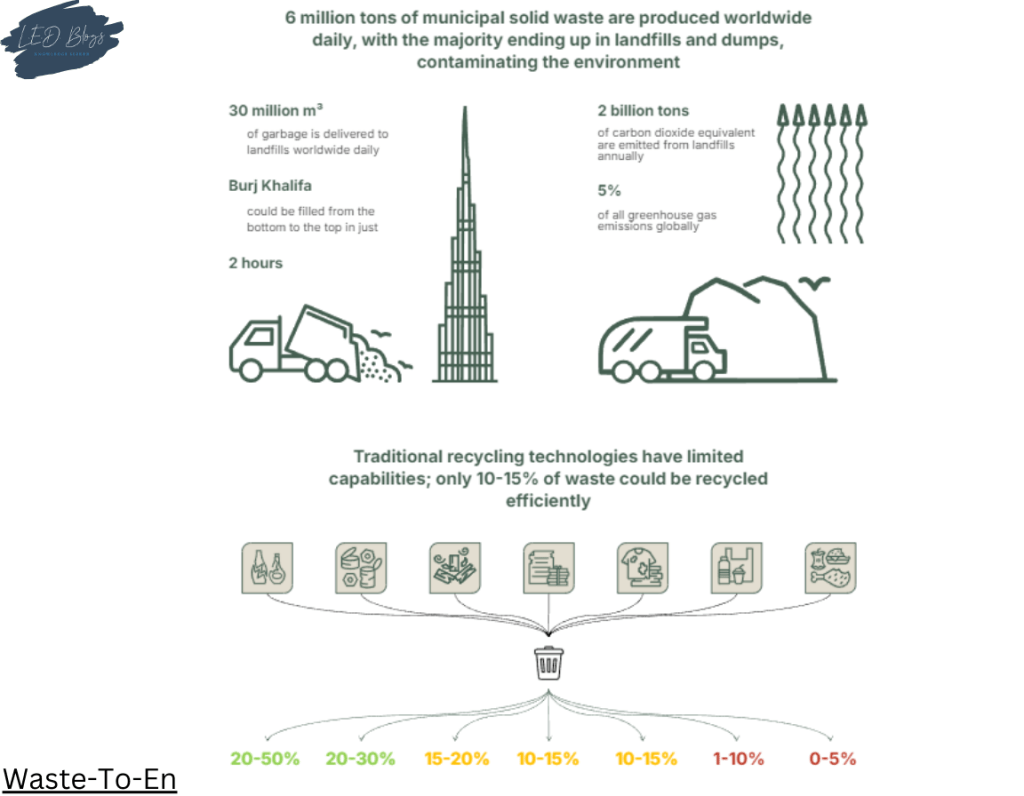
However, in the late 2010s, I became increasingly concerned about environmental issues, mostly worldwide waste dumping, and related greenhouse gas emissions.
In 2018 I initiated and led the project for waste destruction in blast furnaces, lime kilns, and coke batteries. In 2022, I founded my startup company, “Waste-To-En“, to develop an advanced waste recycling technology called gasification.

This process involves the thermo-chemical conversion of waste into synthesis gas, which can be further converted into electricity or other valuable products like sustainable fuels, chemicals, or hydrogen.
Q: Which strategies should be prioritized for setting up a Waste-To-Energy plant?
Dr. Sergey Likharev:
To establish a Waste-To-Energy (WtE) plant effectively, consider the following strategies:
Evaluate Key Factors: Start by assessing key elements such as the potential waste supply at the site, including its composition, volume, and consistency. Additionally, evaluates local energy demand, regulatory requirements, and financial viability.
Select Appropriate Technology: Choose the technology based on the waste type and composition, as well as the desired energy output (electricity, heat, or fuels). Centralized waste utilization often involves incineration, while decentralized approaches might use gasification, anaerobic digestion, or pyrolysis. The selected technology should aim to minimize emissions and environmental impact.
Understand Regulations and Obtain Permits: Familiarize yourself with local regulations and obtain the necessary permits. Regulations in waste management and energy sectors can vary significantly between countries. Energy generation regulations tend to be particularly stringent in developed countries.
Develop a Comprehensive Financial Model: Create a detailed financial model that includes capital expenditure, operational costs, and revenue streams such as waste utilization fees and energy and by-product sales. Consider government subsidies to improve the return on investment (ROI) and identify reliable funding sources.
Engage Stakeholders: Involve all relevant stakeholders, including local communities, government agencies, and industry partners, in the planning process to build support and address concerns. Educate the community about the benefits of WtE and dispel any misconceptions regarding environmental and health impacts.
Q: How is decentralized waste utilization important in the waste-to-energy sector?
Dr. Sergey Likharev:
It is very important. Decentralized waste utilization plays a crucial role in the waste-to-energy sector due to several key advantages:
Independence from Centralized Systems: On-site waste processing relies solely on waste generated by a single producer or a small community, reducing dependency on centralized waste management infrastructure.
Reduction in Transportation Costs and Emissions: Decentralized systems eliminate the need for waste transportation, as they utilize local waste, significantly reducing greenhouse gas emissions related to transportation.
Local Energy Consumption: Most of the generated energy is consumed locally, often without connection to public electric power grids, enhancing energy efficiency and reducing transmission losses.
Adaptability and Efficiency: Decentralized WtE plants are more adaptable to specific waste compositions and community energy requirements, allowing for more efficient resource utilization. Smaller, modular systems can be easily scaled up or down based on changing needs.
Economic and Community Benefits: Local waste processing creates jobs and stimulates economic activity, fostering community support and participation. It also raises public awareness, as communities involved in decentralized waste management tend to be more conscious of their waste generation and management practices, leading to increased environmental consciousness.
Q: Is it cost-effective?
Dr. Sergey Likharev:
Yes, it is. Decentralized waste-to-energy (WtE) plants are cost-effective due to several factors:
Reduced CAPEX: Large centralized facilities typically require at least $200 million to build, whereas smaller-scale WtE plants have a capital expenditure (CAPEX) starting from $100-150 thousand.
This lower initial investment makes them more accessible and easier to finance. Additionally, the CAPEX per utilized ton of waste is three times lower compared to incineration facilities.
Gradual Investment: Communities can begin with smaller investments and gradually expand their decentralized systems as needed. This approach reduces financial risk and allows communities to align investments with budgetary constraints and evolving waste management needs.
Efficient Operations: Decentralized systems often have lower operational costs due to less complex logistics and reduced transportation needs. By processing waste on-site or nearby, these systems minimize costs associated with transporting waste to central facilities.
Q: What challenges can be perceived with decentralized waste utilization?
Dr. Sergey Likharev:
Every innovation comes with its cost. Decentralized waste utilization faces several challenges, including:
Early Stage Technologies: Many WtE technologies suitable for decentralized applications, such as gasification, pyrolysis, plasma, and induced current destruction, are in the early stages of maturity. They require further research and development to realize their full potential and ensure reliability, efficiency, and cost-effectiveness.
Economies of Scale: Decentralized systems may not achieve the same economies of scale as larger, centralized facilities, which can lead to higher per-unit costs for energy production. Compact gasification units might be an exception, offering some cost benefits due to their scalability and adaptability.
Complex Permitting Processes: Navigating local regulations and obtaining necessary permits can be time-consuming and complicated. The lack of clear guidelines for decentralized systems can create additional challenges. Moreover, variability in policies and regulations across regions can hinder the implementation of standardized approaches to decentralized waste management.
Distribution of By-products: Efficiently distributing energy and by-products generated from decentralized systems to local consumers or markets can be logistically complex due to smaller-scale batches. Ensuring that the benefits reach local communities requires careful planning and coordination.
Community Acceptance: Securing community buy-in and addressing public concerns about potential environmental and health impacts can be challenging. Overcoming the “Not-In-My-Back-Yard” (NIMBY) attitude is crucial to gaining public support and ensuring the success of decentralized waste management initiatives. Engaging with communities, providing transparent information, and demonstrating environmental benefits are essential strategies.
Q: Is decentralized waste utilization sustainable for a long-term vision? What are your predictions?
Dr. Sergey Likharev:
I strongly believe that decentralized waste utilization will capture a significant market share, similar to trends in other industries.
Decentralized systems have significantly transformed various aspects of society by complementing or replacing centralized systems.
Personal computers have supplanted mainframes, granting individuals more computing autonomy.
Similarly, personal vehicles offer flexibility compared to centralized public transport. Solar panels decentralize energy production, reducing reliance on large power plants. 3D printing facilitates localized production, disrupting traditional manufacturing.
These shifts highlight the growing importance of decentralized systems in providing flexibility, autonomy, and resilience across diverse sectors, including waste management.
Thank you for your time.
 ledlights