
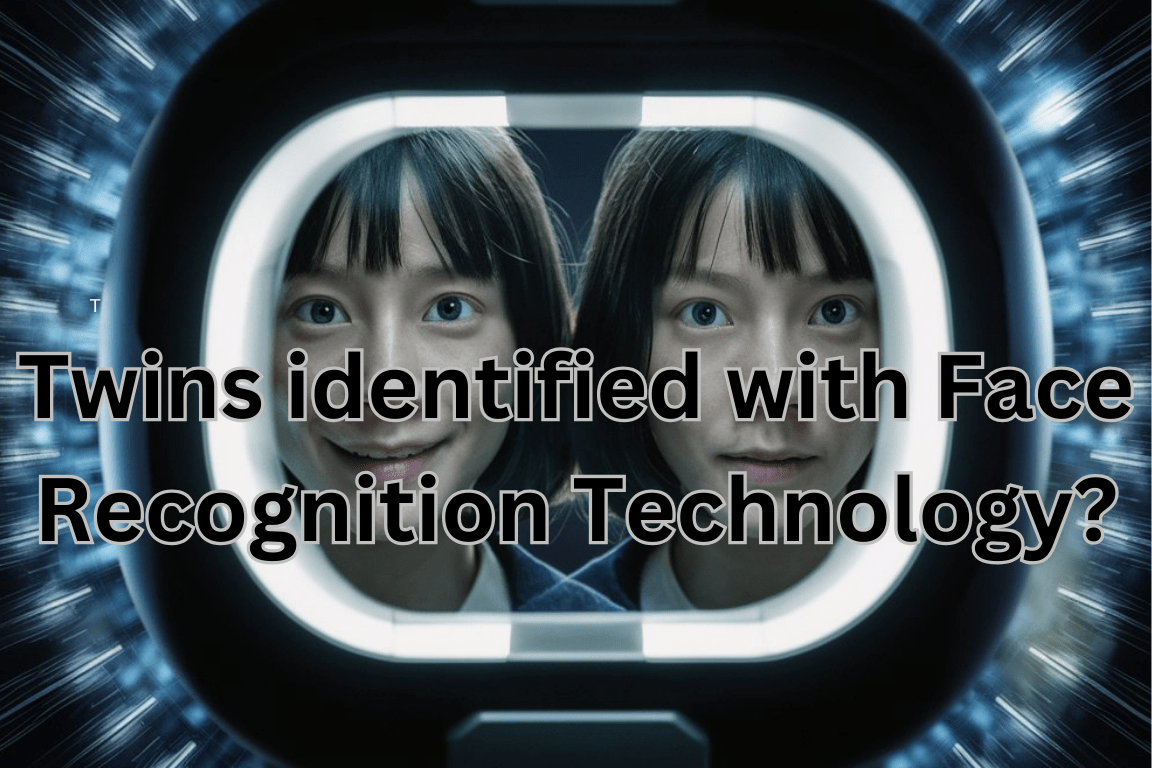
Face recognition technology, one of the crucial biometric processes used in various sectors including Airports, Railways, passports, and various other departments is a magnificent way to control criminal activities and also ensure safety and security.
It is an advanced and unique technology with its share of challenges and limitations.
What is Face recognition Technology?
Face recognition technology identifies or verifies a person by analyzing their facial features. The technology is used to capture an image or video of a face, extracting unique features such as the distance between the eyes, the shape of the nose, etc. The result is continued by comparing it with the records or data available in the databases of the faces.
It is a real-time feature and application.
As per the anyconnect blog,
In the 1960s, the face recognition technology was originated. Woody Bledsoe, Helen Chan Wolf, and Charles Bisson are some of the well-known pioneers, in developing systems to identify or say recognize human faces using computers.
Woodrow Wilson Bledsoe is known as the father of facial recognition, for developing a system to classify photos of faces through a RAND tablet, which was a graphical computer input device.

The input device was used by Bledsoe to manually record the coordinate locations of facial features such as a person’s mouth, nose, eye, and even hairline.
The foundational base was laid out for the face recognition technology, plotting new photographs against the database to identify individuals with the closest numerical resemblance based on the plotted information.
However, it was not accepted without its challenges such as hindering the technology of the period and not having enough processing power to meet the demand of the computing rigors required for scaling up and refining the technology.
As per the history tools,
The face technology software tool requires the support of manual input for identifying facial features, but advancements in the 1980s and 1990s, such as the Eigenface method, led to the improvement of the technology.
The facial recognition system was first commercialized in the early 1990s, driven by programs such as the Face Recognition Technology (FERET) program by DARPA and NIST.
What is the importance of Face recognition technology?
The several reasons for face recognition technology to be important: –
- Security enhancement: – Surveillance and security are widely enhanced for quick and accurate identification of individuals to prevent unauthorized access and enhance public safety.
- Fraud prevention: – Identity theft and fraud were reduced by verifying identities in banking and financial services.
- Convenience: – A seamless and contactless way for authenticating the users to make processes such as unlocking devices, accessing buildings, and verifying payments more efficient.
- Personalization: – The experiences in retail, hospitality, and other sectors were recognized by customers and tailoring services to their preferences.
Top Companies Adopting Face Recognition Technology
According to CBINSIGHTS Research,
Tech companies: –
Amazon, Microsoft, Facebook, and IBM are some of the top tech companies developing facial recognition services in various applications, such as law enforcement and security.
Automotive companies: –
Tesla and BMW are some of the major companies that are developing facial recognition for controlling access to vehicles and enhancing driver safety.
The banking sector as well as retail sectors are also famously using facial recognition technology to prevent any sort of theft, fraud prevention, and enhancing customer authentication. Retailers are enhancing the experience with the use of technology to personalize shopping experiences and prevent theft.
Even the healthcare sector or railway sectors, can very well integrate the technology for check-in processes.
One of the latest examples is Kolkata’s Netaji Subhash Chandra Airport, where Face Technology is very well introduced to speed up the check-in process. It is safe, secure, and also fast.
One of the crucial challenges is to identify the twins, the identical ones. Is it possible for Face Tech to bypass the challenge and provide an accurate result?
As per the experts, Face recognition technology can differentiate between identical twins, although challenging tasks.
How is it done?
The twins are differentiated with Face recognition technology by analyzing minute differences in their facial features.
As per expert reports,
Moles, Freckles, and Scars are minutely observed. Even slight differences in the symmetry of facial features as well as Texture and skin pattern variation are some of the prominent ways to identify and use Facial recognition technology accurately.

Deep learning and neural network algorithm technology are used to understand the subtle differences. Scale-invariant feature transform (M-SIFT) is one of the advanced techniques used to identify key points and analyze the most distinctive features.
As per the expert reports,
The studies show that the lowest equal error rate for recognizing identical twins has been reported as 7.8% to 10.1% depending on the conditions and algorithms used.
The study conducted by the National Institute of Standards and Technology (NIST) and the University of Notre Dame involved 126 pairs of identical twins. The study showed the success of face recognition technology but with sophisticated algorithms and optimal conditions to achieve high accuracy.
It indicates, that the accuracy varies on the environment and time elapsed between image captures.
Face technology is unique; however, nature has its ways of testing your legitimacy, even with triplets, how far the scenarios are going to be correct?
However, once the accuracy is 99.99% also achieved, it can be a remarkable feat to combat any criminal activities, criminal involvement, or any other issues such as terror attacks to other heinous attacks.
Sources:- science abc, springer, Face recognition technology of Identical Twins, Science Focus, VisageTechnologies, cbinsights, expertmarketresearch, datafloq, emergen research, Institute for Internet & the Just Society, NEC, builtin, oloid, itpro, arxiv, IEEE Spectrum
 ledlights