
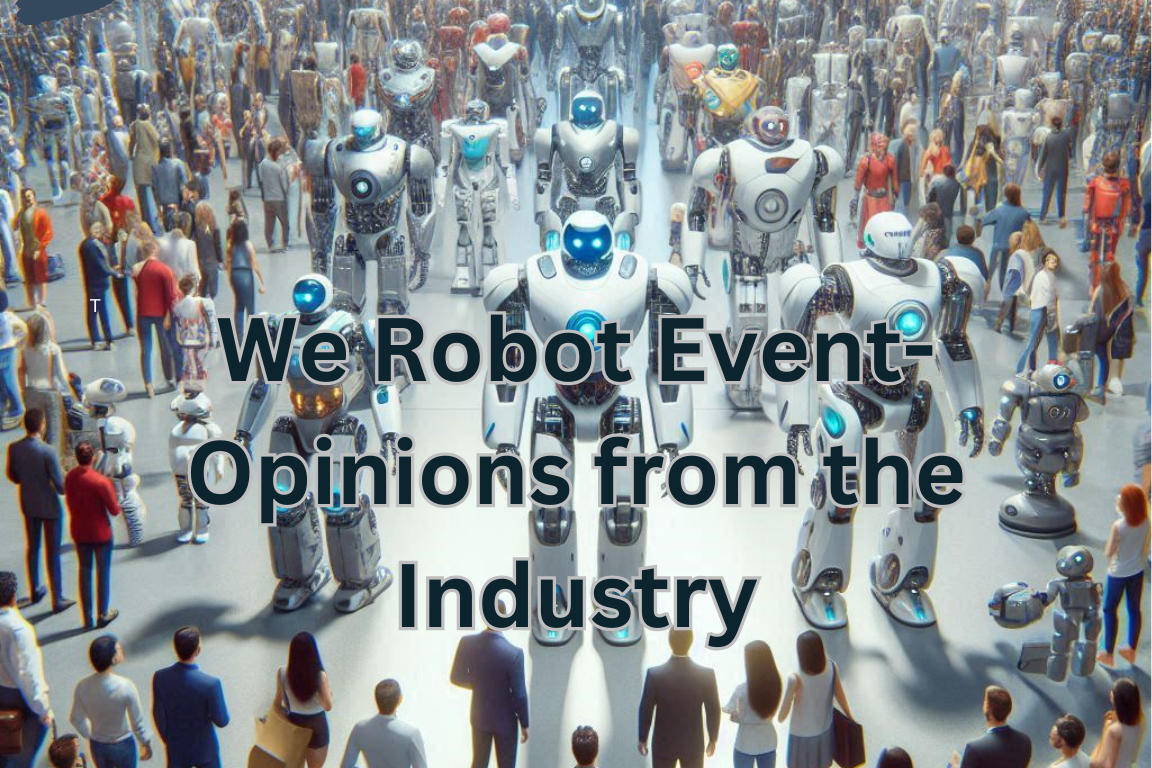
Optimus robot in the Tech Industry
The “We Robot” event was held by Tesla on October 10th at Warner Bros. Discovery Inc.’s movie studio near Los Angeles. Optimus robots could walk autonomously, perform tasks such as pouring drinks, and engage in conversations to entertain and interact with humans.
One notable interaction involved playing Rock, Paper, and Scissors with Optimus, where the robot humorously admitted that the hardest part is learning to be human. Interestingly, this is something we humans also acknowledge—it can be challenging to learn how to be human.
“As you can see, we started up with someone in a robot suit, and then we’ve progressed dramatically year after year,” Musk said in his remarks last week. “So if you extrapolate this, you’re really going to have something spectacular, something that anyone could own, so you can have your own personal R2-D2 [or] C-3PO.”
The event received mixed reactions, sparking conversations within the tech industry. Let’s dive into those reactions and explore what the tech community is buzzing about regarding the event.
Positive Reactions
- Investor Enthusiasm: The Optimus robot’s capabilities, such as walking autonomously, dancing, and performing simple tasks, have generated excitement among investors. The event offered a glimpse into a promising future where robots could assist with household chores and other tasks.
- Analyst Optimism: Analysts like Nancy Tengler from Laffer Tengler Investments praised the robots for their human-like interactions, highlighting their potential to revolutionize various industries, particularly the tech sector and beyond. “Optimus stole the show in my view. Optimus paraded in and danced and looked remarkably human,” Nancy Tengler, CEO of Laffer Tengler Investments, said in a note to clients after attending the event. Mint.
- Wedbush analyst Dan Ives called the soiree a “glimpse of the future,” saying in a writeup that the human-mimicking robot is “potentially much closer to a reality” than thought heading into the evening.
- Analyst George Gianarikas at Canaccord Genuity wrote, “So What!” in a note to clients Monday. “The dexterity shown and developmental progress exhibited by the robots were off the charts,” the analyst said. “And, as Mr. Musk has pointed out before, the robotics industry currently does not have a well-developed supply chain. That means that Tesla, with its internal manufacturing acumen, battery expertise, proficiency in motor design, electronics know-how, and mechanical engineering resources has the potential to create a vertically integrated robotics behemoth over the long term.”
“The report added that employees “oversaw many interactions between the bots and attendees at the Cybercab’s ‘We, Robot’ session in Los Angeles on October 10,” citing sources who did not want to be named. The bots used AI to walk without human control, they added.” Mint
“It gains even more importance as Musk believes the product to be “the biggest ever of any kind” and positioned it as a household helper to be eventually retailed at $20,000-30,000 each.” Mint
Critical Reactions
- Many of the robots’ tasks, such as pouring drinks and engaging in conversation, were remotely controlled by humans. This raised questions about the actual autonomy of the robots and their readiness for market deployment.
- Tesla’s stock took an 11% hit following the “We Robot” event, driven by concerns about the robot’s capabilities and the lack of detailed information on near-term revenue strategies.
- Attendees and analysts felt the demonstrations were misleading, as the robots’ impressive performances were not due to autonomous AI but rather human intervention.
- Bloomberg, The Verge, and other outlets have reported that the bots were being remotely operated by humans, a conclusion that is easy enough to arrive at considering that they all had different voices and their responses and hand gestures were immediate and synchronized.
- Morgan Stanley analyst Adam Jonas also wrote in a report that the bots “relied on tele-ops (human intervention).”
- Gene Munster, managing partner of growth investment firm Deepwater Asset Management, acknowledged the idea that Optimus was remotely controlled and said he had been “fooled” at the event. Still, he said in a post on Musk’s X platform, it gave a “window into the potential around these products.”
The reality of robots interacting with humans is also being questioned, as some are concerned about potential misuse under the guise of fun. There is a lack of clear boundaries where robots could refuse certain actions requested by humans. This highlights the hazy ethical borders, raising concerns that illegal acts could be carried out without proper oversight.
The ethical rules and regulations, or frameworks, are also unclear and do not clearly define what robots can and cannot do.
While the excitement and thrill among the crowd were palpable, the industry’s reactions to the future of humanoid robots like Optimus were mixed. Although the technology showed great potential, challenges remain in achieving full autonomy and market readiness. The event sparked a larger discussion about the true role of AI and robotics in society.
The main concern is transparency and how far AI and robots will expand before we realize the potential dangers they pose. In the 90s, computers were seen as a threat to jobs, yet computer literacy revolutionized the market, and today, we cannot imagine taking a step without them.
The internet, smartphones, e-commerce, and the rise of UPI have transformed the market in ways we couldn’t have imagined. The market is constantly in flux, with unpredictable innovations that could become billion-dollar businesses.
The introduction of AI robots has certainly created a buzz. In small ways, we are already integrating AI robots into our daily tasks and work. The world is moving at an unprecedented pace—while one side of the world sleeps, the other wakes up and continues to evolve and work, ensuring the world is always in motion, and so is technology.
Once we allow technology to become a part of our lives, we can never truly detach from it. We can’t avoid it, unless we seek Moksha—yet even there, we access teachings via YouTube, Google Books, or a simple Google search.
AI robots are advancing rapidly and will undoubtedly change the world as we know it.
Sources:- msn, moneycontrol, Techcrunch
 ledlights