
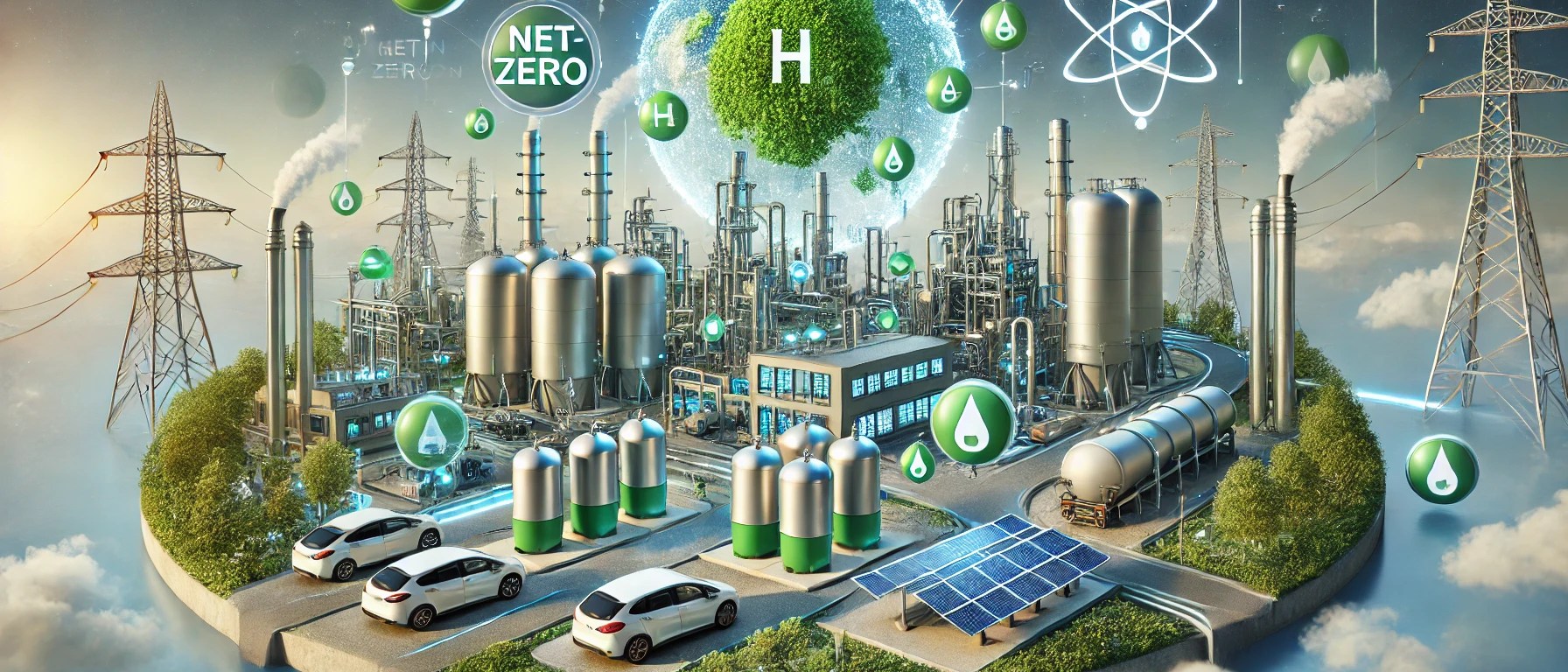
Green Hydrogen in Achieving Net Zero Goals
The global focus is increasingly on green hydrogen and its applications, with its potential to help achieve net-zero goals. However, what is the practical scenario for green hydrogen, and is it worth the investment?
Green hydrogen is considered safer than conventional fuels. Its environmental impact, including hydrogen spills and leaks, is less harmful than fossil fuels. Green hydrogen is lighter than air and rises quickly, reducing the risk of fires.
In terms of flammability, hydrogen has a higher oxygen requirement for explosion compared to fossil fuels. Additionally, hydrogen is non-toxic, unlike many conventional fuels.

However, hydrogen can still be dangerous, as metals may become brittle when exposed to it. Hydrogen mixed with air can be highly explosive, and it is not easily stored at high pressures or in liquid form, posing risks of tank ruptures or leaks. Advanced materials and technologies are essential for ensuring safe storage.
Robust safety protocols are also required to transport hydrogen, whether by pipeline or road, to prevent leaks and accidents.
Green hydrogen is produced through electrolysis, making it more expensive than traditional methods, and reducing production costs remains a significant challenge.
Specialized infrastructure is necessary for hydrogen production, storage, and distribution. Improving the efficiency and durability of electrolyzers, as well as other hydrogen-related technologies, is essential for large-scale deployment.
The public and stakeholders must be educated about the safety and benefits of green hydrogen to encourage widespread acceptance.
Global Demand and Production
- The International Energy Agency (IEA) estimated that we need around 530 million tons (MT) of hydrogen by 2050 to achieve net-zero emissions. It represents a six-fold increase from today’s hydrogen production.
- More than 680 large-scale hydrogen projects have been announced globally, amounting to $240 billion in direct investments. The projects are also available at gigascale production such as industrial usage, transport, and infrastructure.
Regional Initiatives
- One of the leaders in the Green Hydrogen projects is Europe with 314 announced projects, aiming to use hydrogen across industrial applications, transportation, and power generation.
- Asia countries such as Japan and South Korea, heavily invest in green hydrogen projects to reduce carbon footprints.
- North American countries such as The United States and Canada, focus on various projects such as green hydrogen production and usage.
Technological Advancements
- Clean hydrogen is produced with renewable energy sources or with measures for lowering emissions. The cost of green hydrogen is expected to fall to as low as USD 1.3 per kg by 2030 in regions with excellent renewable resources.
- Innovations are on their way to market green hydrogen on a more scalable level.

Green Hydrogen Initiatives in:-
Europe
Europe is heavily investing in green hydrogen to achieve its net-zero goals. The EU’s hydrogen strategy aims to produce 10 million tonnes of renewable hydrogen by 2030 and cover around 10% of the EU’s energy needs by 2050.
- Decarbonizing industrial processes: Hydrogen is used to replace fossil fuels in industries like steel, cement, and chemicals.
- Transportation: Hydrogen fuel cells are being developed for cars, buses, and even ships.
- Energy storage: Hydrogen can store excess renewable energy for use when needed.
- Infrastructure development: Projects like IPCEI Hy2Tech and Hy2Use focus on building hydrogen production and distribution infrastructure.
Asia
Asia is also making significant strides in green hydrogen, with countries like Japan, South Korea, and India leading the way.
- Industrial decarbonization: Green hydrogen is used in sectors like steel, ammonia, and methanol production.
- Energy security: Countries are developing green hydrogen ecosystems to reduce reliance on fossil fuels.
- Export potential: India, for example, has signed export agreements for green hydrogen and ammonia.
- Policy support: Governments are implementing policies and providing financial support to boost green hydrogen projects.
North America
North America is focusing on integrating green hydrogen into its energy mix and industrial processes.
- Industrial applications: Hydrogen is being used to decarbonize industries like refining and chemicals.
- Transportation: Hydrogen fuel cell vehicles are being developed and deployed.
- Research and development: Significant investments are being made in R&D to improve hydrogen production and utilization technologies.
- Policy frameworks: Governments are creating supportive policies and incentives to encourage the adoption of green hydrogen.
In conclusion,
Green hydrogen plays an important role with great potential to help achieve net-zero emissions by 2050. Investments are increasing, and with technological advancements and supportive policies, green hydrogen offers a path to a cleaner and more sustainable future.
Sources:- European Hydrogen Observatory, European Commission, Asia Society Policy Institute, ISAS, orrick, Green Hydrogen safety, IEEE Smart Grid, Belfer Center, Michigan News, Energy Gov, Oxford Academy Clean Energy
 ledlights