

How is electronic waste recycled? A Question of billion-dollar business but also an urgent need to protect our environment and well-being.
The world is moving consciously, with a strong awareness of the importance of recycling and upcycling. The people want to live a better life, with respect and not involve themselves in any harmful manner.
A strong awareness and understanding of the importance of nature and the environment and how concrete jungles destroy everything, if proper steps and measures are not taken into consideration.

Electronics have become an important part of our lives, with debatable pros and cons, we cannot think of living in a world and continuing our daily life without the support of electronic items, equipment, or any other item.
The global value of e-waste was estimated to be at least $62.5 billion annually as of 2019. This value comes from the precious metals and other valuable materials that can be recovered from discarded electronics.
E-waste is a rich source of precious metals like gold, silver, and palladium. For instance, the U.S. loses over 100 tons of gold annually in unrecycled e-waste, which is worth around $6 billion.
Recovering materials from e-waste reduces the need for new mining activities, conserving natural resources and reducing environmental impact.
What exactly we can see is that electronics are not just a part of work but also with innovations and concepts, it can be transformed into a fun activity. Today learning about electronics, led to us a present scenario, where we understand, that waste is an important part of our lives, that we need to deal with.
The door opened to new opportunities, but how sincerely it is done, or are thinking of getting rid of the waste from our lives?
And if the waste is completely removed, how will these recycling companies going to survive?
The recycling of electronic waste (e-waste) is a crucial process that can manage the growing amount of discarded electronics, preventing any harmful substances from polluting the environment and recovering valuable materials.
Why e-waste recycling is important?
- It protects the environment by recycling e-waste that reduces the number of hazardous materials in landfills, preventing soil, water, and air pollution.
- Resource conservation by recovering the valuable materials from e-waste conserves via natural resources and reduces the need for mining and extraction.
- The energy savings are done by recycling electronics with the use of less energy compared to producing new materials from raw sources.
- Job creation is done by the e-waste recycling industry to create new jobs in collections, processing, and material recovery.
Electronic waste recycling is one of the important processes to manage the growing amount of discarded electronics, preventing harmful substances from polluting the environment and also recovering valuable materials.

The process ensures a more sustainable and environmentally friendly approach to managing electronic waste.
10 real-life case studies on e-waste recycling from around the world
India’s E-Waste Management: A significant challenge is faced by India with e-waste due to rapid technological advancements and high consumption rates. The country also implemented various initiatives such as the E-Waste (Management) Rules, 2016, to promote proper disposal and recycling. Informal recycling practices are also posing several environmental and health risks.
China’s E-Waste Recycling Industry: One of the largest e-waste recyclers in the world is China. The country also established formal recycling facilities and implemented various regulations for managing e-waste. However, concerns are high with informal recycling practices and illegal imports of e-waste.
Germany’s E-Waste Recycling Program: A well-established e-waste recycling program, has been accepted by Germany, with a high collection rate and strict regulations. The country also implemented the Electronics and Electrical Equipment Act (ElektroG) to ensure the proper disposal and recycling of e-waste.
United States E-Waste Recycling Initiatives: The United States also has several e-waste recycling initiatives, such as the Electronic Product Environmental Assessment Tool (EPEAT), supporting consumers to identify environmentally friendly electronics. The country also has state-level regulations for managing e-waste.
Japan’s E-Waste Recycling Initiatives: A comprehensive e-waste recycling system from Japan with a high collection rate and strict regulations. The country also implemented the Home Appliance Recycling Law to ensure proper disposal and recycling of e-waste.
South Korea’s E-Waste Management: The country also implemented the Act on Resource Recycling of Electrical and Electronic Equipment and Vehicles to manage e-waste. The formal recycling facilities are established by the country to promote public awareness about e-waste recycling.
Brazil’s E-Waste Recycling Efforts: The National Policy on Solid Waste (PNRS) to manage e-waste. The country also established formal recycling facilities and promoted public awareness about e-waste recycling.
Nigeraia’s E-waste Recycling Challenges: E-waste challenges are also faced due to informal recycling practices and lack of proper regulations. The country also implemented the National Environmental Standards and Regulations Enforcement Agency (NESREA) for addressing e-waste management.
Australia’s E-waste Recycling Program: The National Television and Computer Recycling Scheme (NTCRS) also implemented various ways to manage e-waste. The country also established formal recycling facilities and promoted public awareness about e-waste recycling.
Kenya’s E-waste Recycling Initiatives: It also implemented the E-Waste Management Regulations 2016 to manage E-waste. The country also established formal recycling facilities and promoted public awareness about e-waste recycling.
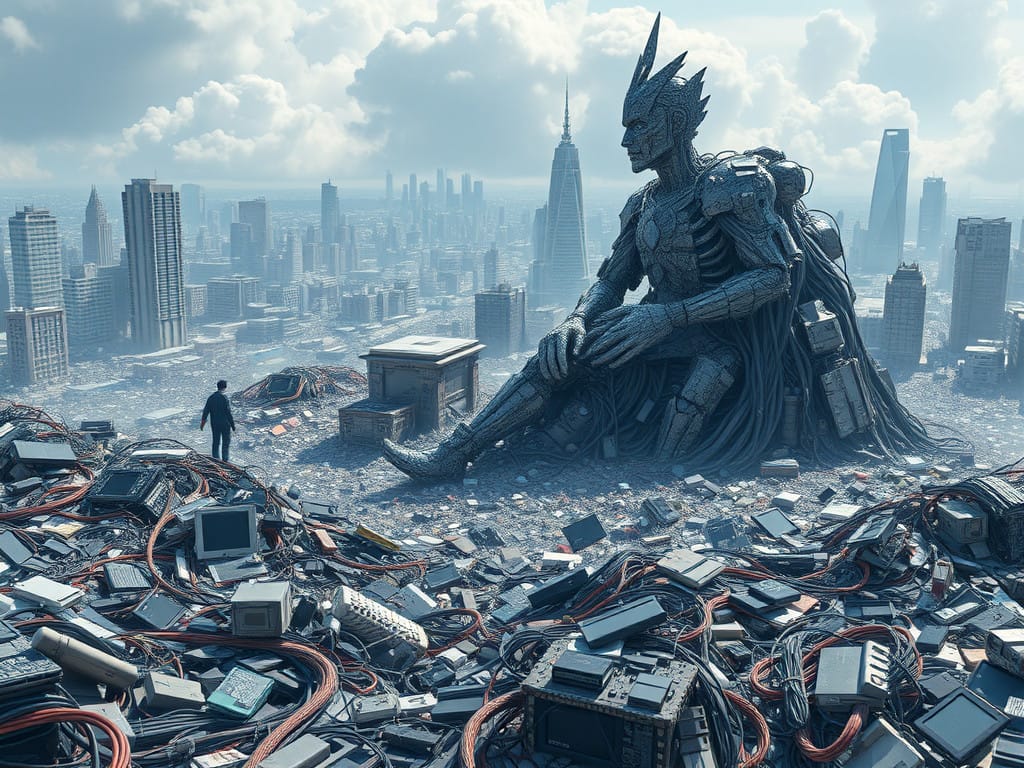
Companies involved in e-waste recycling and the environmental benefits
Attero Recycling (India)
Attero Recycling is one of India’s leading e-waste recyclers. They have pioneered innovative recycling technologies to recover precious metals like gold, silver, and palladium from electronic waste. By doing so, they have significantly reduced the need for mining new materials, conserving natural resources, and reducing environmental degradation.
Ecoreco (India)
Ecoreco is India’s first professional e-waste management company. They offer end-to-end e-waste solutions, including reverse logistics, data destruction, and material recovery. Their efforts have helped prevent toxic substances like lead and mercury from polluting the environment, ensuring safer disposal of electronic waste.
Sims Recycling Solutions (Global)
Sims Recycling Solutions operates globally and is a major player in the e-waste recycling industry. They have developed advanced recycling technologies to recover valuable materials from electronic waste, reducing the environmental impact of electronic disposal. Their recycling efforts have conserved natural resources and reduced greenhouse gas emissions.
GEM Co., Ltd. (China)
GEM Co., Ltd. is a leading e-waste recycler in China. They have established formal recycling facilities and implemented stringent regulations to manage e-waste1. Their recycling practices have significantly reduced air and water pollution, contributing to a cleaner environment.
Gravita India is another prominent e-waste recycling company in India. They specialize in recovering metals from electronic waste, reducing the need for new mining activities. Their recycling efforts have helped conserve natural resources and reduce environmental pollution.
Elima (India)
Elima is a leading e-waste recycler in India, focusing on innovative solutions to tackle the growing e-waste challenge. They ensure that electronic waste is collected, transported, and recycled in an environmentally sound manner. Their efforts have prevented toxic substances from contaminating soil and water, protecting the environment and public health.
Namo eWaste Management (India)
Namo eWaste Management provides door-to-door e-waste collection services across various Indian cities. Their streamlined e-waste disposal process has significantly reduced the amount of electronic waste ending up in landfills, promoting a circular economy.
Saahas Zero Waste (India)
Saahas Zero Waste is a community-centric organization that focuses on responsible waste management. They have implemented various e-waste recycling programs, ensuring that electronic waste is handled safely and efficiently. Their efforts have contributed to cleaner air and water, benefiting both the environment and public health.
Greenobin Recycling (India)
Greenobin Recycling specializes in paper waste management but also handles e-waste recycling. Their recycling practices have reduced the environmental impact of electronic waste, conserved natural resources, and reduced pollution.
CJD E-Cycling (Global)
CJD E-Cycling is a global e-waste recycling company that focuses on responsible recycling practices. Their efforts have helped reduce air pollution, prevent water contamination, and conserve natural resources. By recycling electronic waste, they have contributed to a cleaner and healthier environment.
Sources:- ipocentral, ecoverva, ClimateSort, elima, CJD e-cycling, mywastesolution, ijsrd, statista, WHO, BCG, mdpi
 ledlights