
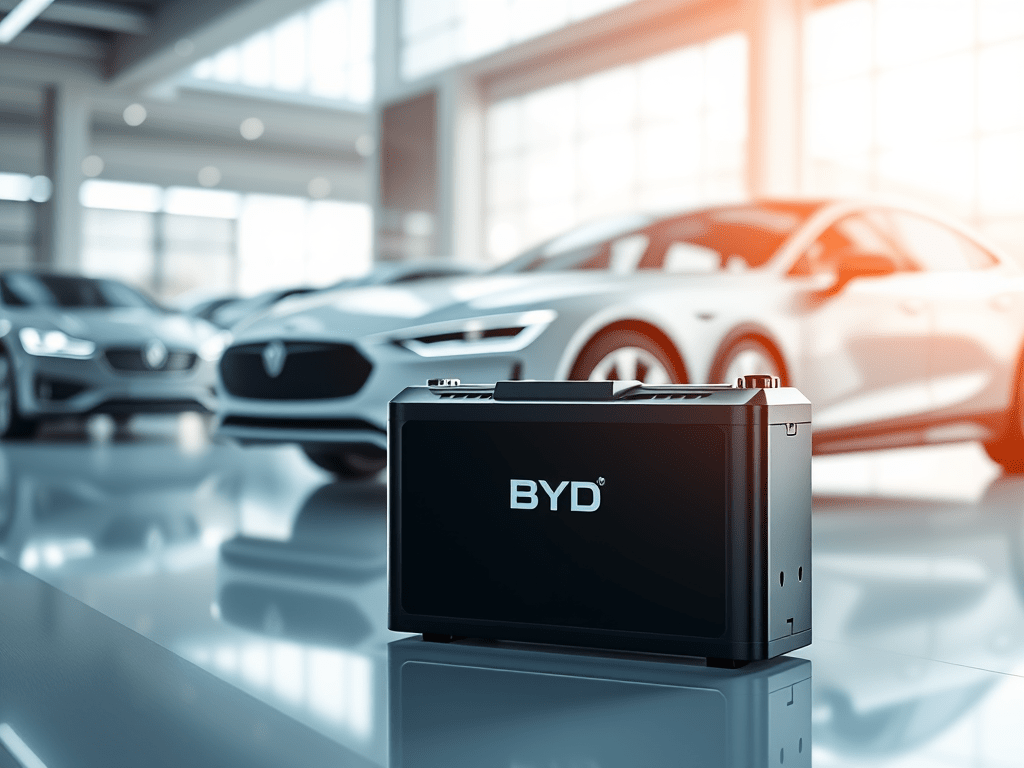
BYD Company Limited, also known as Build Your Dreams, is a Chinese multinational manufacturing conglomerate headquartered in Shenzhen, Guangdong, China. Founded by Wang Chuanfu in February 1995, BYD initially started as a battery manufacturing company. Over the years, it has diversified into various industries, including automobiles, electronics, renewable energy, and rail transit.
In 2023, BYD sold over 3 million vehicles, marking a 61.9% increase from the previous year. The company’s extensive product lineup and strong brand recognition have contributed to its success in China.
Early Years and Expansion
BYD’s journey began with the production of rechargeable batteries. In 2002, the company became the first Chinese lithium-ion battery supplier for Motorola and Nokia, marking its entry into the global market2. The company went public in 2002, listed on the Hong Kong Stock Exchange.
In 2003, BYD acquired Xi’an Tsinchuan Auto Co. Ltd, which later became BYD Auto Co. Ltd. This acquisition marked the company’s foray into the automobile industry. BYD Auto has since grown to become the world’s largest manufacturer of plug-in electric vehicles.
Key Milestones
- 2002: Became the first Chinese lithium-ion battery supplier for Motorola and Nokia.
- 2003: Acquired Xi’an Tsinchuan Auto Co. Ltd, forming BYD Auto.
- 2008: Warren Buffett’s Berkshire Hathaway acquired a significant stake in BYD.
- 2009: Launched the world’s first plug-in hybrid automobile, the BYD F3DM.
- 2010: Established Shenzhen BYD Daimler New Technology Co. Ltd in partnership with Daimler AG.
- 2023: BYD sold over 3 million vehicles and produced 111.4 GWh of electric vehicle batteries.
Technological Innovations
BYD is known for its technological innovations, particularly in the field of electric vehicles. The company introduced the Blade Battery, which is known for its high energy density, safety, and long lifespan. BYD also developed dual-mode hybrid power technology, which combines the benefits of electric and combustion engines.

Why can BYD’s Blade Battery be a game changer?
1. Cost Reduction and Growth Strategy: BYD’s new Blade battery, launching in 2025, aims to cut costs by 15%. This reduction is expected to enhance BYD’s competitive edge by making EVs more affordable. Lower production costs can translate to either higher profit margins or more competitive pricing, both of which can drive sales and market share growth.
2. Technological Advancements: The new Blade battery will feature higher energy density (up to 210 Wh/kg) and faster charging rates. This performance improvement can attract more customers, especially those prioritizing range and charging speed. The dual-format design (short and long blades) caters to different applications, further broadening its market appeal.
3. Market Impact in China: In China, BYD is already a significant player with a 24.4% market share. The new Blade battery can strengthen BYD’s position by offering a premium LFP battery at a lower cost. This can help BYD compete more effectively against rivals like CATL, which currently holds a 46% market share.
4. Global Market Impact: Globally, BYD aims to expand its presence, particularly in markets like the US and Europe. The cost-effective and high-performance Blade battery can make BYD’s EVs more competitive in these regions, potentially accelerating the global shift towards electric vehicles.
5. Peer Competitors: BYD’s main competitors in the EV battery market include CATL, Tesla, and Panasonic. CATL, in particular, has been aggressive in cutting battery prices, which has intensified the price war in the industry. BYD’s new Blade battery aims to match or surpass CATL’s offerings while maintaining cost advantages.
6. New Roadmap to Compete: BYD’s strategy hinges on continuous innovation and cost leadership. By investing in R&D and expanding production capacity, BYD aims to stay ahead of competitors. The new Blade battery represents a significant step in this direction, potentially setting a new benchmark for EV batteries.
7. Impact on Rivalry with Other EVs: The introduction of the Blade battery can intensify competition in the EV market. Other manufacturers may need to innovate or form partnerships to keep pace with BYD’s advancements. This could lead to faster technological progress and more competitive pricing, ultimately benefiting consumers.
In summary, BYD’s new Blade battery is poised to support the company’s growth by reducing costs, enhancing performance, and expanding its market presence both in China and globally. It also sets a new competitive benchmark that could reshape the EV battery market and intensify rivalry among key players.
Sources:- BYD, Team-BHP, Tridens Technology, electrek, electric guide, wapcar, electrive, newmobility, canvabusinessmodel
 ledlights