
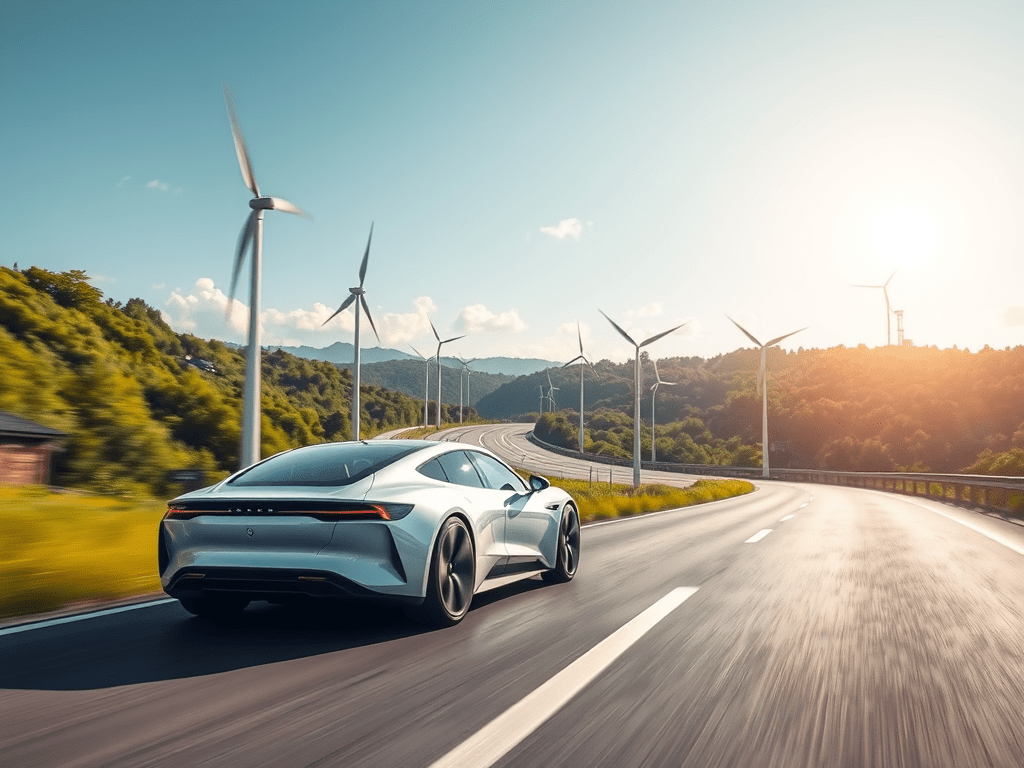
Exploring Electric Vehicle Technology
The world of transportation is changing on a rapid scale. Within a decade, the whole transportation system and the way you commute to another part of the world change with alternative fuels or other alternative solutions.
And why not?
After all, change is inevitable, and with change only, the best solution to preserve the world and as well the way to commute can be discovered. However, who decides the reality of the market products? Which one is going to be an everlasting solution for the commutation from one end of the world to the other side of the world?
Is it a hydrogen vehicle, electric vehicle, petrol vehicle, or diesel vehicle?
Which one matters the most? The cost or lesser traveling time? In the ever-evolving, fast-paced world, transportation is the key to driving the economy on a higher scale; however, are we compromising our environment?
Is there truly any sustainable solution for us? Will there be any?
Let’s scrutinize the world of electric vehicles with advanced technologies every year. What is there in the future? What’s on the horizon for electric vehicles?
Does the future of electric vehicles comprise longer ranges, faster charging, autonomous driving, and more sustainable materials?
Longer Ranges
The biggest challenge for electric cars is their limited range. Some of the current models can go for several hundred miles on a single charge, but they still fall short of the range of traditional gasoline cars.
Shortly, battery technology is advancing rapidly with an expectation of electric cars with ranges of 500 miles or more in the coming years. Electric cars are also a more practical choice for long-distance travel, and it’s easier to find charging stations when you are on the road.
Faster charging
Charging is one of the biggest challenges in electric cars especially in covering up long-distance travel.
The current models are charged overnight with several hours to fully charge with a hassle for busy drivers, but the news is that charging times are set to decrease in the future.
In battery technology, new advances and charging infrastructure are expected to see electric cars so that charging is possible in less than 15 minutes.
Battery Swapping is also one of the crucial turning points or it can be the game changer to break the long charging period. If the car charging can be reduced to less than 10 minutes, it will revolutionize the concept of long queues and also speed up the process.
However, is it after all good for the vehicle or our environment? Is still questionable?
Autonomous Driving
Many electric car manufacturers are interested in investing in autonomous driving technologies that can revolutionize the way we travel.
The driving technology can also be introduced in the electric cars in the future where the AVs are equipped with sensors, cameras, and other technologies that allow them to see the surroundings and also make strong decisions on their own.
The steering, braking, or changing lanes are all important for an autonomous car. The car is also able to take care of the driving situation for proper commutation and to make long-distance travel much easier and more enjoyable.
Sustainable Materials
The most suitable and advanced technology can be the sustainable materials to be used in electric cars in the future. Automakers can recycle materials in their cars such as recycled plastics and textiles. The companies are also able to experiment with bio-based materials, such as plant-based plastics, and bio-based foams.
Sustainable materials are also able to reduce the environmental impact of car manufacturing and make cars lighter and more efficient.
Crumple Zones
Graphene and carbon nanotubes are some of the advanced materials that could be used in crumple zones to make cars safer. The materials provide the necessary strength and also flexibility than traditional metals to help the cars absorb impact energy more efficiently in the event of a crash.
Lightweight Chasis
Magnesium and aluminum alloys are also some of the suitable materials to be used for making car chassis lighter and more energy efficient.
Wireless Charging
Inductive charging technologies are to be used for charging electric cars wirelessly to eliminate the need for charging cables and make a more convenient charging environment efficient.
Artificial Intelligence
An area that could be lucrative and yet challenging to embed AI in an electric car. It can be a super and powerful car to be charged up to improve electric car safety, efficiency, and performance. AI systems also could support monitoring the battery’s health or even check the charging times.
Car’s speed or even handling the road conditions or even optimizing charging times could be useful for the AI to be implemented.
Advanced Battery Technology
Solid-state batteries, lithium-sulfur batteries, or even other advanced battery technologies could lead to more strong solutions for battery consumption, long charging time, or limited range. The batteries are lighter, safer, and more energy-dense than traditional lithium-ion batteries.
V2G Technology
Electric cars with Vehicle-to-grid (V2G) technologies act as energy storage devices, to feed the excess energy back into the electrical grid. The grid’s energy load needs to be balanced out to make electric cars to be more sustainable.
Sources:- Mobility house
 ledlights