
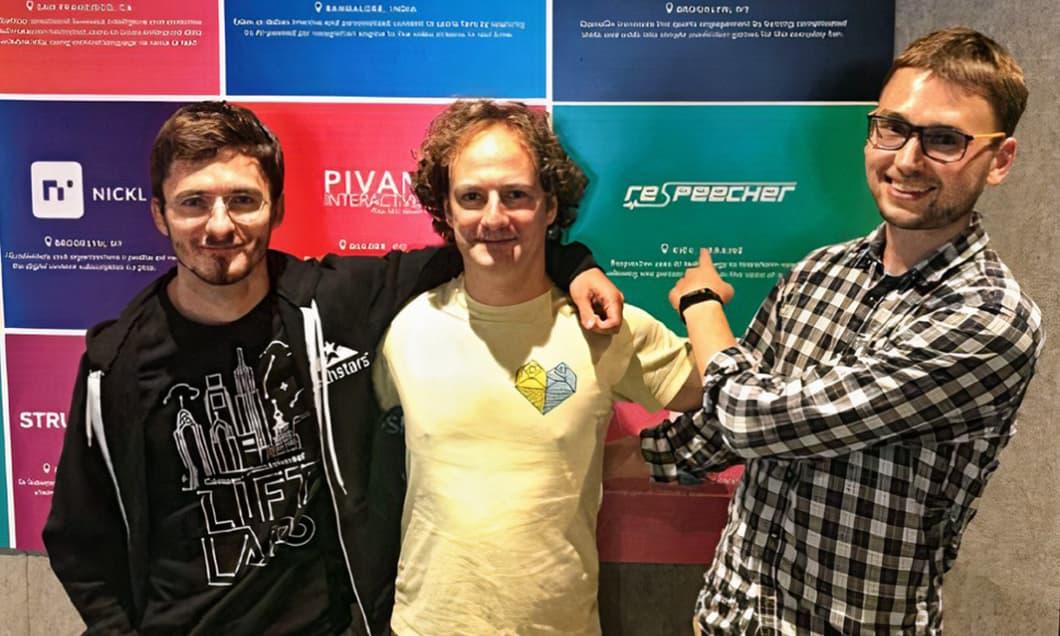
An exclusive Interview with Alex Serdiuk, CEO and Co-founder of Respeecher. Is the Approach by Respeecher to AI Voice ethical?
Respeecher is an AI-powered voice synthesis company. The company uses advanced deep-learning techniques to enable a person to speak in the voice of another.
It was founded in 2018, and the company worked on various notable projects such as synthesizing young Luke Skywalker’s voice for Disney+’s “The Mandalorian”. (You can read more tech-related Interviews here.)
Let’s know more in-depth about the company from Mr. Alex Serdiuk, CEO and Co-founder of Respeecher.
Q1:- Can you tell me about the founding story of Respeecher and what inspired the Idea?
Respeecher began with a question: could we clone human speech and swap voices? This idea first took shape during a hackathon organized by Grammarly in 2015, where our co-founders, Alex Serdiuk, Dmytro Bielievtsov, and Grant Reaber, explored voice technology. By 2018, their passion for innovation and frustration with robotic-sounding voice tools drove them to officially launch Respeecher.
The goal was clear: to create synthetic voices indistinguishable from the original, opening new creative possibilities for filmmakers, game developers, and other creators. Today, we’ve partnered with top Hollywood studios, game creators, and advertisers to make this vision a reality.

Q2:- How has Respeecher’s technology evolved since its inception in 2018?
Respeecher has come a long way from its early days when voice cloning required weeks of processing and complex datasets. We’ve focused on improving speed, accessibility, and emotional authenticity.
Initially, we concentrated on achieving a level of quality that even Hollywood sound engineers would approve of. Once we met that benchmark, we began optimizing usability. Today, creators can access our Voice Marketplace for self-serve voice cloning, and we’re expanding features like accent conversion, real-time voice synthesis, and enhanced emotional range. It’s exciting to see how much progress we’ve made—and how much potential there still is.
Q3:- What are some of the most notable projects Respeecher has worked on, such as “The Mandalorian.”?
Respeecher has had the privilege of contributing to some truly iconic projects that demonstrate the potential of voice cloning technology. One such project was our work on Cyberpunk 2077: Phantom Liberty. When Miłogost Reczek, the original voice of Viktor Vektor in the Polish version of the game, passed away, CD PROJEKT RED faced the challenge of maintaining the character’s unique voice. With the approval of Reczek’s family, we recreated his voice using our technology. Fans later shared how deeply they appreciated hearing Viktor sound just as they remembered, a testament to the emotional power of voice preservation.
Another standout was the documentary Goliath, which brought basketball legend Wilt Chamberlain’s voice back to life. We worked with decades-old recordings to reconstruct his voice, ensuring every detail was authentic. The collaboration with Chamberlain’s family and the creative team resulted in a narration that felt true to his legacy and resonated deeply with viewers.
Beyond entertainment, our Share UA Voices initiative during the war in Ukraine highlights how voice technology can play a powerful role in advocacy. As a company based in Ukraine, this project was deeply personal to us. Despite working from bomb shelters and under unimaginable circumstances, we collaborated with global celebrities to deliver messages of hope and solidarity in Ukrainian. Using our voice cloning technology, we helped these voices resonate authentically, reaching Ukrainian hearts at a time when language and culture have been under attack.
Q4: How does Respeecher ensure the ethical use of AI in voice cloning and synthesis?
Ethics are at the heart of everything we do. We recognize the profound responsibilities that come with developing AI voice cloning technology and are committed to ensuring it is used solely for positive and respectful purposes.
We operate under five core principles: transparency, trust, accountability, partnership, and leadership. Every voice replication requires explicit consent from the voice owner, secured through signed agreements to ensure full understanding and control. This applies to professional voice actors, celebrities, and even historical figures, whose voices are only recreated with respect for their legacy and proper permissions from their estates.
We also refuse projects in politics or areas where the technology could be misused.
Respeecher collaborates with leading organizations to shape the ethical framework for synthetic media. As members of initiatives like the Partnership on AI, the Content Authenticity Initiative, and Witness’s Deepfake Rapid Response Task Force, we work to establish industry-wide standards and promote responsible innovation. These partnerships underscore our dedication to fostering trust and transparency in the use of generative AI.
Q5: What are the key challenges Respeecher faces in the field of AI voice cloning?
One of the biggest challenges is ensuring our synthetic voices are not only indistinguishable from real ones but also emotionally expressive. Capturing extreme emotions like crying or screaming requires extensive data and advanced modeling.
Another challenge lies in accent conversion, where subtle linguistic differences must be replicated authentically. We’re actively working on solutions to address these complexities while ensuring our technology remains accessible and ethical.
Q6: Can you explain the process of creating a cloned voice using Respeecher’s technology?
Creating a cloned voice starts with collecting a high-quality recording of the target voice—around 30–40 minutes of varied audio is ideal. Our AI models analyze the unique features of the voice, including its emotional nuances and pitch.
Once trained, the system can convert a source speaker’s voice into the target voice, capturing all the subtle details that make it authentic. Users can even fine-tune elements like pitch and accent through our Voice Marketplace.
Q7: What future developments can we expect from Respeecher in the next few years?
The future of Respeecher is about pushing boundaries. We’re working on accent conversion, faster training times, and improving the emotional range of our technology.
Beyond that, we see opportunities in healthcare, helping individuals with speech impairments regain their voice. Our Voice Marketplace will continue to evolve, bringing new features to creators of all sizes. The possibilities are endless, and we’re just getting started.
Q8: How does Respeecher’s technology contribute to the localization of content for global markets?
Respeecher allows content creators to adapt their work for different regions without losing the authenticity of the original performance. For example, an actor’s voice can be used in multiple languages while preserving their unique delivery.
This not only saves time and costs in localization but also ensures audiences worldwide can connect with the content in a meaningful way. With features like accent conversion on the horizon, the localization potential is only growing.
Q9: What advice would you give to someone looking to enter the field of AI voice synthesis and cloning?
Start with curiosity and a strong foundation in AI, machine learning, and audio engineering. Stay updated with industry advancements and ethical guidelines.
Platforms like our Voice Marketplace make it easier to experiment and learn without needing extensive technical expertise. Dive in, experiment, and focus on creating solutions that are both innovative and ethical. The future of AI voice synthesis is bright, and there’s room for passionate innovators to make a real impact.
Thank you.
 ledlights