
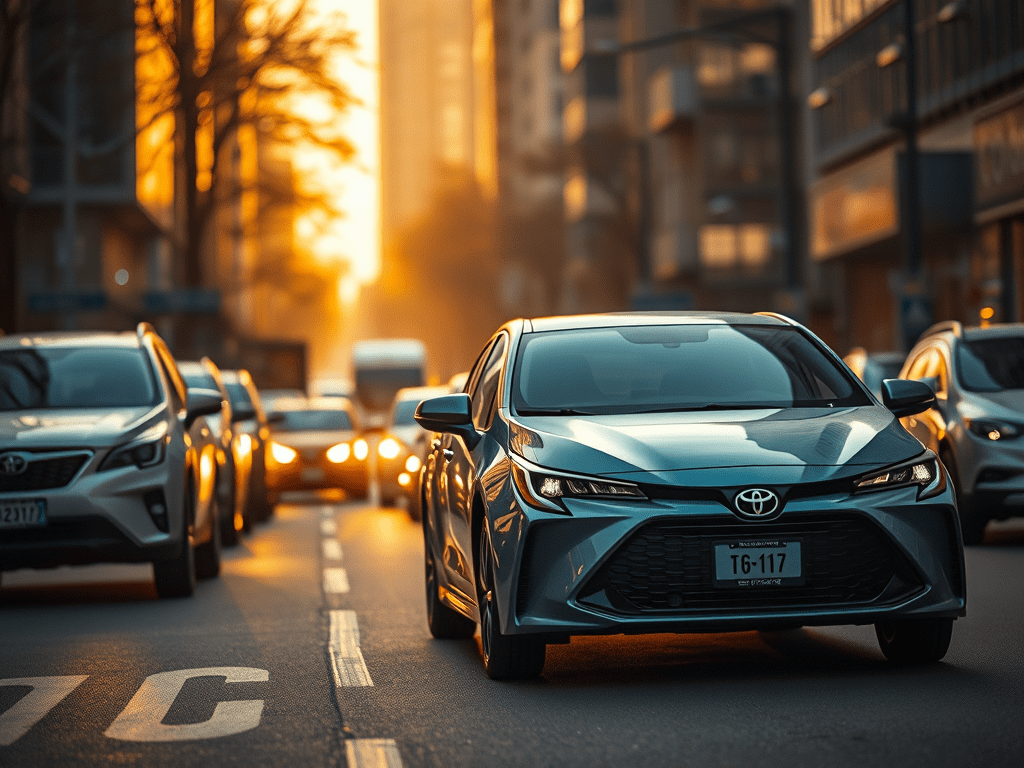
The present is about electric vehicles, with different policies and strategies. However, will they be the future ever? Do they hold any future in the vehicle industry?
Chairman Akio Toyoda has thrown a lot of skepticism towards the Battery Electric Vehicle. This is despite Toyota’s growing BEV initiative under CEO Koji Sato.
A critical question has been raised about technology, carbon footprint, and economic impact. Toyoda’s arguments touch on emissions realities, economic risks, and the viability of a “multi-pathway” strategy for the global auto sector.
Let’s look at the professional analysis of these claims in the context of market and environmental realities: –
BEV vs. “Multi-Pathway”- Toyota’s Strategic Split
Toyota is under Akio Toyoda’s chairmanship. The company is doubling down on the belief that hybrids remain essential in the foreseeable future. Alternative power trains are also viewed as essential.
The “multi-pathway” approach has been shared by the current CEO Koji Salto. The approach is more BEV-focused, oriented to meet the regulatory and market pressures, balancing the innovation with Toyota’s historic pragmatism.
Are EVs “Dirtier Than You Think”?
According to Toyoda, EVs are only as clean as the grid that powers them. In regions such as Japan, where fossil-fueled(thermal) power plants are dominant. The grid electricity that is charging a BEV results in higher life-cycle emissions than a hybrid.
After several organizations analyzed the Life Cycle, the results show that EVs are better able to eventually outperform combustion engines and hybrids in markets with green grids (e.g., Norway, parts of the US). In coal-heavy grids, the emissions advantage is diluted.
For Example,
- In Norway(hydro power), a charged BEV delivers large net reductions. In Japan, where 70%+ of power is thermal, the margin vs. a hybrid shrinks.
- Battery production is an energy-intensive process. This is particularly true for lithium, nickel, and cobalt mining. This makes BEVs initially “dirtier.” Yet, their emissions can be reduced over their lifetime use.

Hybrids as a Bridge Technology
Toyoda asserts that 27 million Toyota hybrids have delivered CO₂ savings. This is on par with 9 million BEVs, given the current global mix of energy infrastructure.
This math broadly holds when considering both tailpipe and grid emissions, particularly in countries with slow renewable adoption. Hybrids run efficiently in daily use, are more affordable than BEVs, and do not require major grid upgrades.
- Practicality: Hybrid vehicles are easier to integrate into regions with unreliable charging infrastructure and limited renewable energy.
- Affordability: Hybrids have lower upfront costs, helping more consumers transition away from conventional gasoline vehicles.
The argument is, are hybrids always cleaner?
- As per Visual Capitalist Elements, a medium-sized BEV averages ~39tCO2e over its life cycle. Hybrids average ~39tCO2e in comparison. ICE vehicles average ~55tCO2e.
- According to Nenpower, in regions powered by coal-heavy grids, hybrids do not match BEVs in real-world lifecycle emissions. They even exceed BEVs in emissions.
- According to ICCT, battery production is emission-intensive. In Europe, BEVs emit about half the total Green house Gas emission of conventional cars. This reduction is clear when accounting for usage over time.
- According to MDPI, the life cycle analysis of Toyota’s Prius shows that the plug-in variant emits ~17.5% less GHG over its life cycle as compared to the standard hybrid.
Economic Risks of Full-scale BEV Shift
Toyoda also warns that a rapid BEV shift will jeopardize millions of automotive jobs in Japan. This includes other traditional auto manufacturing economies. Supply chains and labor forces are heavily embedded in internal combustion (ICE) technologies.
The real challenges are: –
- The displacement of Job due to EVs requiring fewer parts with different skill sets, affecting traditional manufacturers and suppliers.
- The supply chain upheaval due to reorienting investments, tooling, costly work training, and time-consuming.
- Supply chain upheaval: Reorienting investments, tooling, and workforce training is costly and time-consuming.
But history offers a lesson: structural shifts—from mechanization to digitalization—are rarely halted by resistance. Every change comes with its price.
The proactive reskilling, supportive policy frameworks, and transition timelines are the way to smooth the operation.
The Multi-pathway Strategy
Toyota is not solely relying on BEVs. Instead, it is focused on other strategies. These include hybrids, plug-in hybrids, fuel-cell vehicles, and synthetic fuels.
The approach can recognize different regional needs, energy policy, and customer demands.
- Hydrogen fuel cells remain a Toyota focus, particularly for markets like Japan and California, though infrastructure is still nascent.
- Synthetic fuels and advanced bio-fuels allow existing engines to run cleaner.
Will BEVs Ever Exceed 30% Market Share?
Toyoda forecasts that BEVs will never surpass 30% of global car sales. The rest will be hybrids, plug-in hybrids, and combustion vehicles.
The statement can also be challenged with the next data: –
- According to Motor 283, in 2024, China had explosive growth in EVs. This accounted for 48% of all new car sales. This was an increase from 38% the previous year. Hence, it outperforms Chairman Toyoda’s 30% cap hypothesis.
- As per Tech in Asia, in March, new Energy Vehicles(BEVs +PHEVs) surpassed 51% market share in China in Mid-2025.
- As per CleanTechnica, by June, plug-in vehicles hit a 53% share, with BEVs alone at around 31%.
- According to ResponsibleUsMotor 283Financial Times, the worldwide EV sales rose 27% year-on-year in 2025. This growth was led by markets in China and Europe.
Toyota’s 30% ceiling hold in slower-adopting regions. It is already being exceeded in leading markets. This suggests that the global trajectory soon outpace that threshold.
- 2025-2030 Outlook: Projections range from 25–35% BEV share by 2030 globally, though regional variance is high (e.g., China will exceed 40%, but Africa, Southeast Asia are to remain <10%).
Conclusion
How Far Are Toyoda’s Statements True?
Toyoda’s skepticism about an all-EV future is grounded in current grid realities, production emissions, and economic impact studies.
In 2025, hybrids and other technologies offer practical, near-term benefits, especially in regions reliant on fossil-fuel electricity. However, as global grids decarbonize and battery technology improves, BEVs’ emissions advantage will grow.
- Short Term: Hybrids remain critical, especially in less-developed markets and regions with dirty grids.
- Long Term: As renewable energy scales, EVs will eventually deliver the largest net reduction in carbon.
- Economic Diversification: Multi-pathway approaches hedge regulatory and market risks and support smoother workforce transitions.
Toyoda’s concerns are currently valid. However, they diminish in importance over the next decade. This change depends on infrastructure, technology, and policy evolution.
The future may not be completely BEV or hybrids. However, a mix of these technologies is part of the foreseeable future.
 ledlights