
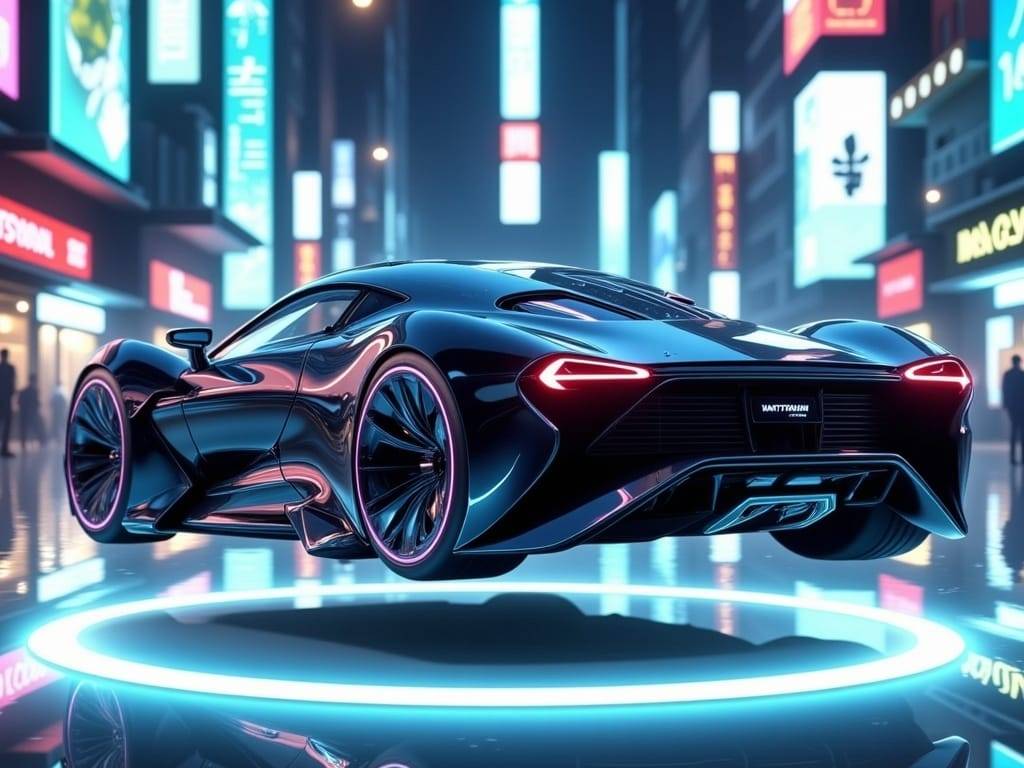
Magnetic levitation technology
The latest magnetic levitation technology (maglev), is already making waves, as a groundbreaking innovation to revolutionize the automotive industry.
The Quantum Machines Unit was developed at the Okinawa Institute of Science and Technology (OIST), promising to eliminate the need for traditional engines and batteries that are leading the path for a cleaner and more sustainable future.
What is Magnetic Levitation?
Magnetic levitation, or maglev, is a technology that allows an object to float above a surface without any physical contact, using magnetic fields to counteract gravitational forces.
Japan’s new automotive innovation, this technology allows cars to hover a few centimeters above specially designed tracks. By eliminating friction, maglev cars can achieve much higher energy efficiency compared to conventional vehicles.

The technology also increases the speed of vehicles due to Eliminating friction, efficient propulsion with the use of linear motors rather than traditional internal combustion engines or electric motors, aerodynamic design to minimize air resistance, and stable levitation.
How it works?
The researchers utilize diamagnetic materials and powerful magnets to create a stable levitation effect. The new technology requires only energy during the initial startup phase to generate the magnetic field that creates levitation for the cars to move with minimal input energy, making the system highly efficient.
The key benefits of the Technology
- One of the most revolutionary aspects of the technology is its ability to eliminate the need for engines and batteries in cars. It also leads to a significant reducing the weight of vehicles with lower manufacturing costs, and decreases the environmental impact due to battery production and disposal.
- The friction is removed between the car and the track with less energy needed to maintain the motion with lower operational costs and reducing carbon emission. Maglev-based transportation systems support global efforts to reduce greenhouse gas emissions. The technology is in alignment with Japan’s commitment to achieve net-zero carbon emissions by 2050. The development of the latest technology is expected to provide a significant economic impact. The support from the government for green hydrogen projects has the potential to create over 700 jobs and unlock over GBP 11 billion of investment by 2030.
- The investments support Japan to be a world leader in the hydrogen industry, providing a cleaner fuel for energy-intensive industries and transport.
Despite the progress, the challenges are huge in maglev car technology with high cost of production, technological advancements, and economies of scale.
Renewable energy sources also require high-energy storage solutions for a steady supply of green hydrogen.
The future of maglev car technology looks quite promising with the government setting up highly ambitious targets, aiming for up to 10 GW of low-carbon hydrogen production capacity by 2030. It also includes up to 1 GW of electrolytic hydrogen and up to 1GW of carbon capture, usage, and storage-enabled hydrogen operation by 2025.
Japan seems to have achieved the highly ambitious government target of running projects for electrolytic and alternative technologies between 2025 and 2030.
Sources:- Electrical Technology, Eco news, The Diary 24, Teqno Verse
 ledlights